
Quick answer: The most spectacular rice terraces in Vietnam are concentrated in Northern Vietnam’s mountains: Mu Cang Chai (Yen Bai), Hoang Su Phi (Ha Giang), Muong Hoa Valley (Sapa), Pu Luong (Thanh Hoa), and Y Ty (Lao Cai), peaking during the golden harvest in September and October.
The Century-Old Agricultural Engineering of Vietnam’s Rice Terraces
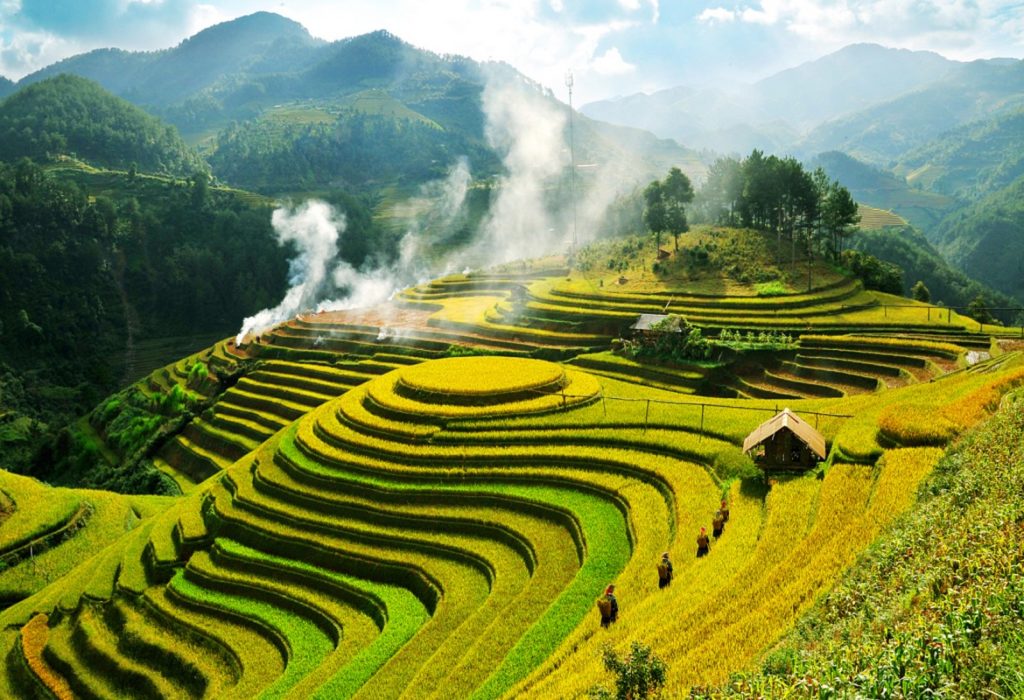
Carved meticulously into steep mountain slopes across Northern Vietnam, terraced rice fields (ruộng bậc thang) represent one of humanity’s most harmonious achievements between indigenous engineering and nature. Over hundreds of years, ethnic minority communities—primarily the H’mong, Dao, Tay, and Ha Nhi—have channeled gravitational water systems from mountaintop rainforest springs through bamboo aqueducts to irrigate vertical cascading terraces.
Today, these mountainsides are recognized as national cultural heritage sites and draw travelers from across the globe. Whether hiking the trails on our Vietnam adventure and trekking tours or riding the winding mountain passes on a guided Northern Vietnam motorbike tour, experiencing these landscapes in person is unforgettable.
The Two Magical Visual Seasons: Water-Pouring vs Golden Harvest
Before planning your journey, you must time your visit to witness one of the region’s two visual masterpieces:
- The Water-Pouring Season (Mùa Nước Đổ · May to June): Farmers flood the tiered terraces with summer rains to prepare the soil for planting. The mountains reflect sky, clouds, and morning sunlight like colossal curved mirrors.
- The Golden Harvest Season (Mùa Lúa Chín · September to October): The terraces turn a brilliant, radiant golden yellow as the rice ripens. The sweet fragrance of fresh grains fills the valley air as whole villages gather for the annual harvest. This is the peak photography window across Northern Vietnam.
Top 5 Legendary Rice Terrace Destinations
- 1. Mu Cang Chai (Yen Bai Province): The undisputed crown jewel of Vietnamese rice terraces, recognized as a Special National Monument. Must-see vantage points include the Raspberry Hill (Mam Xoi) in La Pan Tan, the Horseshoe Hill (Vanh Mong), and the vertigo-inducing Khau Pha Pass.
- 2. Hoang Su Phi (Ha Giang Province): Among the steepest and most dramatic terraced fields in Southeast Asia, sculpted by the La Chi, Dao, and Nung people. Hoang Su Phi remains far less commercialized than Sapa, offering pure hiking through villages like Ban Luoc, Phung, and Thong Nguyen.
- 3. Muong Hoa Valley (Sapa, Lao Cai Province): The most accessible rice terrace valley, cascading beneath the dramatic shadow of Fansipan peak (the roof of Indochina). Walking through Ta Van, Lao Chai, and Hau Thao villages combines majestic terraced scenery with welcoming ethnic homestays.
- 4. Pu Luong Nature Reserve (Thanh Hoa Province): Situated just 4 hours southwest of Hanoi, Pu Luong offers lush terraced valleys framed by limestone peaks and giant bamboo waterwheels along the Cham River. An ideal eco-resort destination for travelers who cannot travel further north into high mountain passes.
- 5. Y Ty (Bat Xat, Lao Cai Province): Perched along the Chinese border at 2,000 meters elevation, Y Ty is famous for rice terraces carpeted by rolling sea of clouds (săn mây) and traditional rammed-earth earthen houses of the Ha Nhi people.
5 Hidden & Emerging Terraced Valleys
If you wish to escape tourist crowds and discover pristine agricultural valleys, explore these 5 emerging gems:
- Tu Le Valley (Yen Bai): Located at the foot of Khau Pha Pass, famed for fragrant green sticky rice (cốm Tú Lệ) and soothing natural hot mineral springs.
- Bac Son Valley (Lang Son): An emerald flat valley dotted with limestone karst cones where rice is harvested twice a year, creating a colorful patchwork of green and yellow.
- Trung Khanh (Cao Bang): Beautiful river valleys lined with golden terraces leading toward the thunderous Ban Gioc Waterfall.
- Hong Thai (Na Hang, Tuyen Quang): Towering terraced slopes overlooking the Gam River, blanketed by white pear blossoms in spring and golden rice in autumn.
- Ta Xua (Son La): Famed for its ‘Dinosaur Backbone’ mountain ridge overlooking terraced slopes drifting through mist.
Combine your trek with a deep cultural understanding of local communities through our Vietnam heritage and ethnic minority tours.
To plan your northern highland transport and seasonal photography window, pair this rice terrace calendar with our guide on taking the overnight scenic train from Hanoi to Sapa, our curated list of the top 10 things to do in Sapa town, and our Ha Giang month-by-month weather guide.
Frequently Asked Questions
When is the golden season (ripe rice season) in Northern Vietnam?
The golden harvest season peaks between mid-September and mid-October. Lower-elevation valleys like Pu Luong harvest in June and October, while high-altitude northern regions like Mu Cang Chai, Sapa, and Hoang Su Phi harvest exclusively in September and October.
Which is more scenic for rice terraces: Mu Cang Chai or Sapa?
Mu Cang Chai offers denser, more expansive, and more dramatic 360-degree terraced landscapes specifically sculpted for agriculture. Sapa offers better luxury hotel infrastructure, mountain cable cars (Fansipan), and easier railway and expressway access from Hanoi.
How do I get from Hanoi to Mu Cang Chai?
Mu Cang Chai is located approximately 300 kilometers northwest of Hanoi (about 6 to 7 hours by road). The most comfortable option is a private limousine van or car via the Noi Bai – Lao Cai Expressway, exiting toward Nghia Lo and traversing the breathtaking Khau Pha Pass.
Are homestays in ethnic villages safe and comfortable?
Yes. Authentic community homestays in villages like Ta Van (Sapa) or Ban Luoc (Hoang Su Phi) are welcoming, safe, and clean. Many now feature private rooms with western-style en-suite bathrooms, mosquito netting, and delicious home-cooked family dinners.
What should I pack for trekking through Northern Vietnam rice terraces?
Essential packing items include sturdy waterproof trekking shoes with strong traction, lightweight moisture-wicking hiking pants, a rain jacket, insect repellent, sunscreen, trekking poles for slippery mud paths, and extra camera memory cards.
Can I see green rice terraces in Vietnam during the summer?
Yes. Between July and August, the rice plants grow vigorously, covering the mountainsides in lush, vibrant shades of emerald green. While not golden, the vibrant green landscape against deep blue skies is breathtaking.
Conclusion & Expert Travel Advice
Standing atop Northern Vietnam’s mountains watching golden terraced fields ripple in the autumn breeze is one of Asia’s most soul-stirring travel moments. Browse our complete catalog of Vietnam package tours or tailor a private northern mountain adventure directly with our Hanoi-based expedition planners.
Tags:
bac son,hoang su phi,hoian,mai chau,Mekong Delta,mu cang chai,muong thanh,Ninh Binh,pu luong,Rice Terraces in Vietnam,Sapa,Tam Coc,Trang An