Visiting temples and shrines in Southeast Asia is often one of the most meaningful parts of a journey through Thailand, Cambodia, and Vietnam. These sacred places are not simply tourist attractions; they are living centers of faith, history, and community life. From golden Buddhist temples in Bangkok to ancient Angkor shrines and peaceful pagodas tucked into Vietnam’s countryside, each site carries deep spiritual significance.
However, many travelers unintentionally offend local customs due to cultural differences, lack of awareness, or habits carried over from Western sightseeing norms. Understanding what to avoid when visiting temples and shrines helps you show respect, connect more deeply with local culture, and enjoy a smoother, more authentic travel experience.
This guide shares practical, experience-based insights into temple etiquette across Thailand, Cambodia, and Vietnam, helping first-time and returning visitors navigate sacred spaces with confidence, respect, and cultural sensitivity.
Understanding the Cultural Importance of Temples in Southeast Asia
Temples Are Living Spiritual Spaces, Not Museums
One of the most common mistakes travelers make is treating temples like museums or photo backdrops. In Thailand, Cambodia, and Vietnam, temples are active places of worship where monks pray, locals make offerings, and families come for spiritual guidance. Daily rituals, chanting, meditation, and ceremonies continue regardless of tourists passing through.
Avoid loud conversations, joking behavior, or rushing through prayer areas. Even if a temple is famous or busy, remember that you are entering someone else’s sacred space. Observing quietly and moving with intention shows respect and allows you to experience the atmosphere more deeply.
Different Countries, Shared Values
While architectural styles differ, temple etiquette across Thailand, Cambodia, and Vietnam shares many common values. Respect for monks, modest behavior, mindfulness, and humility are central to Buddhist and local spiritual traditions. Understanding these shared values will help you avoid awkward or disrespectful situations regardless of which country you are visiting.
Clothing Mistakes to Avoid at Temples and Shrines
Wearing Revealing or Casual Clothing
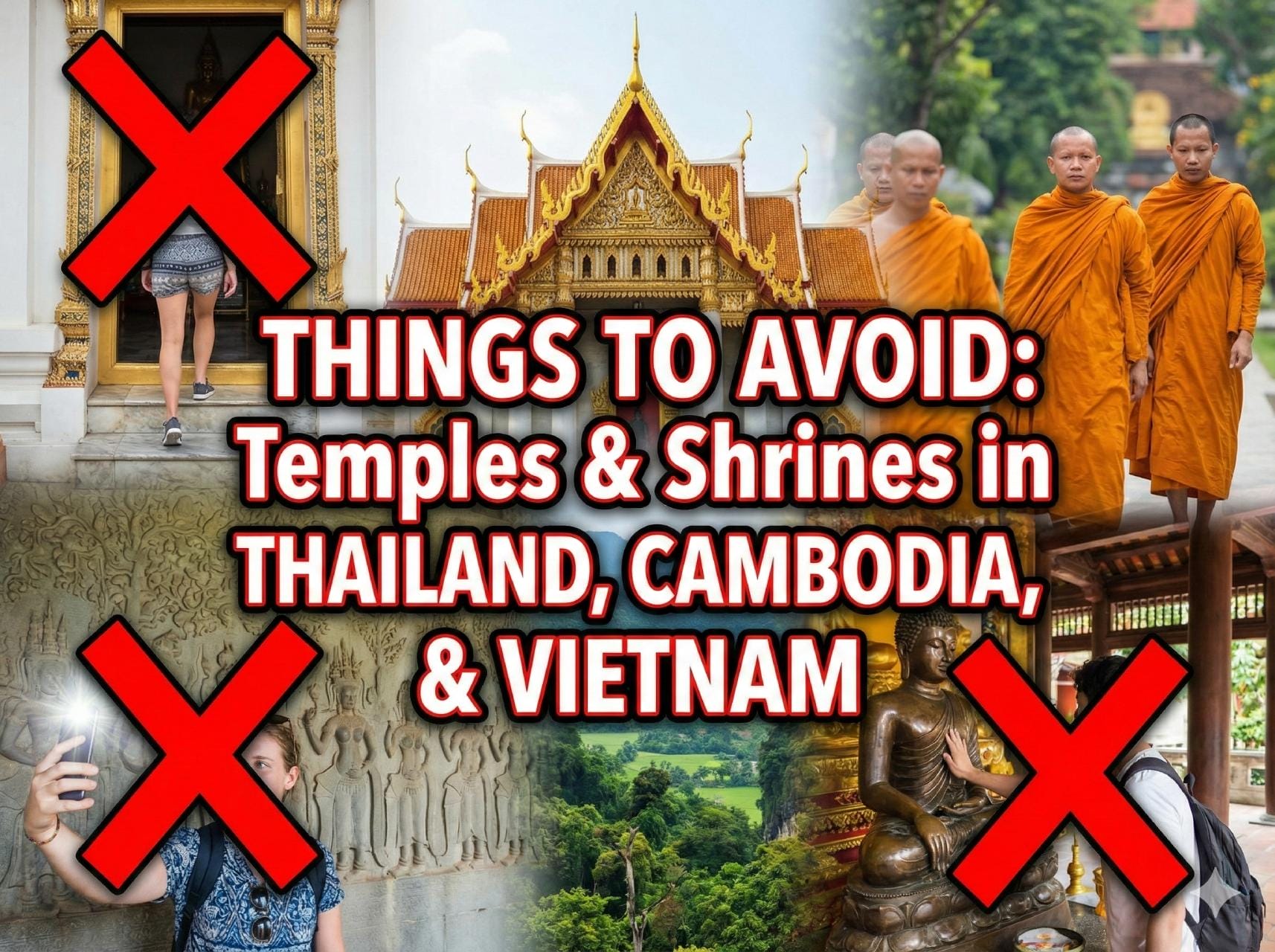
One of the most frequent issues travelers face is inappropriate clothing. Shorts above the knee, tank tops, crop tops, low-cut shirts, mini skirts, and sheer fabrics are generally not acceptable in temples.
In Thailand and Cambodia especially, dress codes are strictly enforced at major sites like the Grand Palace in Bangkok or Angkor Wat. In Vietnam, smaller pagodas may be more relaxed, but respectful attire is still expected.
Avoid assuming that hot weather justifies minimal clothing. Lightweight long pants, skirts below the knee, and shirts that cover shoulders are the safest choices. Carrying a scarf or sarong in your bag is a simple solution if you are visiting temples spontaneously.
Wearing Shoes Inside Sacred Areas
In all three countries, shoes must be removed before entering temple buildings. This applies to prayer halls, shrines, and sometimes even raised platforms outdoors.
Avoid walking inside sacred areas with shoes on, even briefly for a photo. Pay attention to signs, follow locals’ behavior, and remove footwear neatly. Wearing slip-on shoes or sandals makes this easier during temple-heavy sightseeing days.
Behavior to Avoid Inside Temples
Touching Sacred Objects or Statues
Buddha statues, altars, relics, and offerings are sacred objects. Touching them for photos, leaning against them, or climbing on structures is considered disrespectful.
In Vietnam and Cambodia, you may see ancient carvings or statues worn by time. Avoid touching them, even gently. Oils from hands can cause long-term damage, and local communities take preservation seriously.
Sitting or Standing Improperly
In Buddhist culture, feet are considered the lowest and dirtiest part of the body. Avoid pointing your feet toward Buddha statues, monks, or altars when sitting. If seated on the floor, tuck your feet to the side or behind you.
Never sit on altars or raised platforms meant for worship. When standing near monks or elders, avoid looming over them or positioning yourself higher than sacred images.
Photography Mistakes Travelers Often Make
Taking Photos Without Permission
Photography rules vary by temple. Some allow photos everywhere, while others restrict photography inside prayer halls or during ceremonies. Flash photography is often prohibited as it disrupts worship and damages artwork.
Avoid taking photos of monks, worshippers, or ceremonies without asking permission. In Cambodia and Vietnam, some locals may feel uncomfortable being photographed while praying. Respecting boundaries creates more meaningful interactions and avoids uncomfortable situations.
Prioritizing Photos Over Respect
Another common mistake is blocking walkways, interrupting rituals, or climbing structures to get the perfect shot. Temples are not social media sets. Be patient, wait your turn, and accept that some moments are meant to be experienced rather than captured.
Interacting with Monks and Religious Figures
Touching Monks Inappropriately
In Thailand and Cambodia, monks follow strict codes, especially regarding physical contact with women. Avoid touching monks, handing items directly to them, or sitting too close unless invited.
If you wish to give an offering, follow local customs. Often, donations are placed on a cloth or tray rather than handed directly.
Disrespectful Conversations or Gestures
Avoid joking, teasing, or making casual comments about religious practices. Even if something feels unfamiliar or unusual, approach with curiosity rather than judgment. Speaking softly and calmly around monks shows cultural awareness and respect.
Offering Etiquette and Donation Mistakes
Treating Donations as Mandatory Fees
While donations are appreciated, they are usually voluntary. Avoid assuming that every temple requires payment beyond an entrance fee. Give what feels appropriate, and never demand special treatment in return.
In Vietnam, donation boxes are common near altars. In Thailand and Cambodia, offerings may include incense, flowers, or small amounts of money. Follow local examples and avoid placing money directly on statues.
Misusing Incense and Ritual Items
Lighting incense without understanding its purpose can be inappropriate. Avoid lighting too many sticks or placing them incorrectly. If unsure, observe locals or ask politely.
Cultural Sensitivities Specific to Each Country
Thailand: Royal and Religious Respect
Thailand places strong emphasis on respect for religion and the monarchy. Avoid jokes or casual remarks about Buddha images. Wearing Buddha imagery as fashion or posing disrespectfully with statues is considered offensive.
Cambodia: Respect for History and Healing
Cambodia’s temples often carry layers of history, including periods of conflict and restoration. At Angkor and other sites, avoid climbing ruins or ignoring restricted areas. Preservation is deeply important to local communities.
Vietnam: Quiet Devotion and Ancestral Worship
Vietnamese temples often blend Buddhism, Taoism, and ancestor worship. Avoid interrupting prayer rituals, burning excessive incense, or touching ancestral altars. Quiet observation is appreciated.
Common Mistakes First-Time Visitors Make
Many travelers unintentionally offend simply because they are unaware. Rushing through temples, dressing for convenience instead of respect, and prioritizing sightseeing schedules over cultural sensitivity are common issues.
Planning your itinerary with adequate time for temple visits allows you to move slowly, observe rituals, and appreciate the spiritual atmosphere rather than treating temples as checklist items.
How Respectful Behavior Enhances Your Travel Experience
When travelers show respect, locals respond warmly. You may be invited to observe ceremonies, receive blessings, or engage in meaningful conversations. Respect opens doors to deeper cultural understanding and memorable moments that go far beyond surface-level sightseeing.
Travelers who follow temple etiquette often describe these visits as the most peaceful and emotionally impactful parts of their journey through Southeast Asia.
Frequently Asked Questions About Visiting Temples in Thailand, Cambodia, and Vietnam
What should I wear when visiting temples in Southeast Asia?
Wear clothing that covers shoulders and knees. Lightweight long pants, modest dresses, and covered tops are ideal. Avoid revealing or tight outfits.
Can tourists enter all temples freely?
Most temples welcome visitors, but some areas may be restricted during ceremonies or reserved for worshippers only. Always respect signage and local guidance.
Is photography allowed inside temples?
It depends on the temple. Many allow photography outside but restrict it inside prayer halls. Flash photography is often prohibited.
Do I need to remove my shoes at all temples?
Yes, removing shoes is standard practice before entering temple buildings in Thailand, Cambodia, and Vietnam.
Is it okay to talk to monks?
Yes, if done respectfully. Avoid physical contact, speak politely, and be mindful of cultural boundaries, especially regarding gender.
Are children allowed in temples?
Yes, but they should be supervised and encouraged to behave quietly and respectfully.
Explore Southeast Asia’s sacred heritage with confidence and cultural respect. Join a thoughtfully designed Vietnam, Cambodia, and Thailand journey with Viet Long Travel for meaningful, smooth, and stress-free experiences.
Tags:
Asia travel guide,Buddhist customs,Cambodia shrines,cultural travel tips,respectful travel,Southeast Asia culture,spiritual tourism,temple etiquette,Thailand temples,Vietnam pagodas