Traveling through Southeast Asia for the first time is one of those life-defining experiences. The colors, the food, the kindness of locals, the way ancient temples coexist with modern cities — it all feels overwhelming in the best possible way. But before you can sip egg coffee in Hanoi, cruise the Mekong River, or watch the sun rise over Angkor Wat, there is one practical step that every first-time traveler must get right: visas.
Understanding Vietnam visas, Thailand visas, and Cambodia visas can feel confusing at first, especially since rules change, entry options differ by nationality, and online information is often outdated or contradictory. This guide is written specifically for first-time travelers who want clarity, confidence, and peace of mind before their Southeast Asia journey begins.
Rather than listing dry requirements, this article walks you through the visa process the same way a seasoned traveler or local expert would explain it — clearly, realistically, and with real-world travel context.
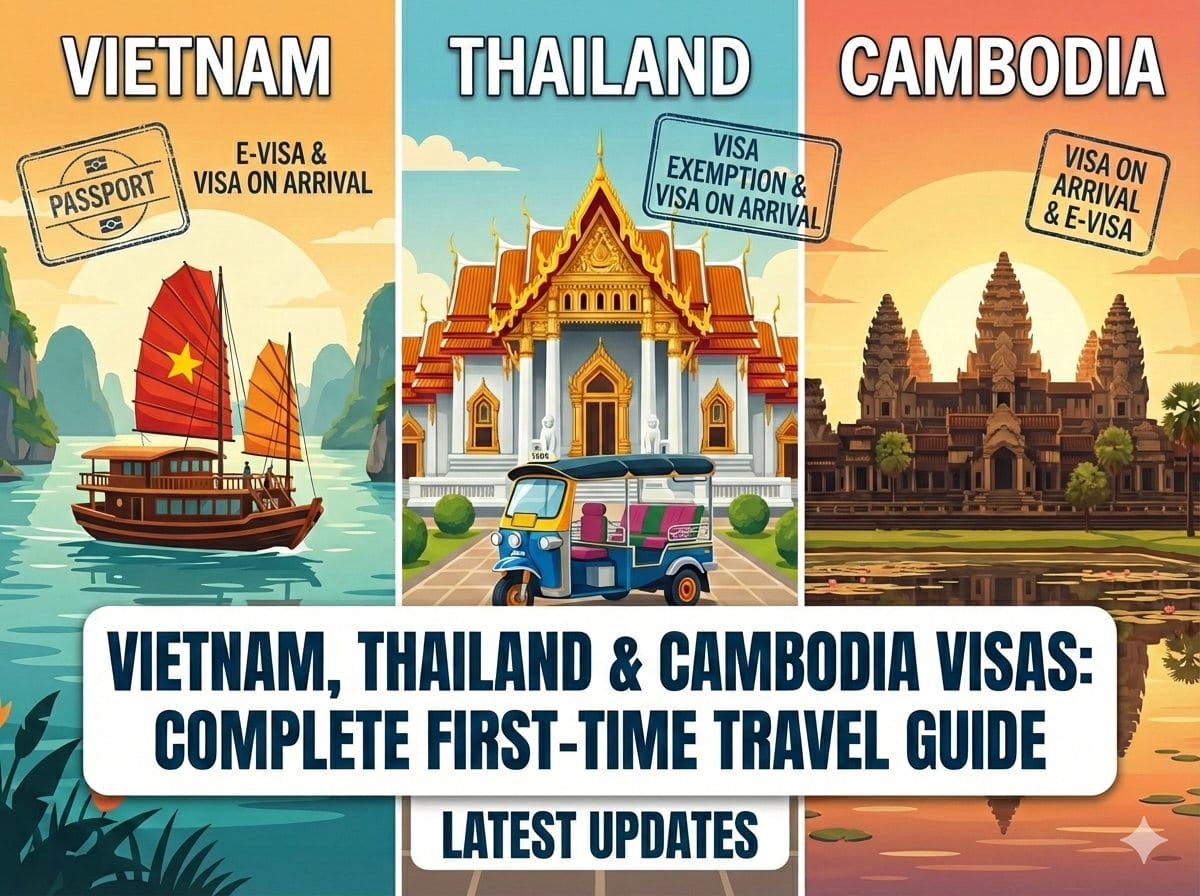
Understanding Southeast Asia Visa Policies as a First-Time Traveler
One of the most reassuring things about traveling to Vietnam, Thailand, and Cambodia is that all three countries actively welcome international visitors. Tourism plays a vital role in their economies, and visa systems are designed to be relatively accessible, even for first-time travelers.
That said, each country has its own rules, exemptions, stay durations, and entry methods. A visa that works for Thailand does not automatically work for Vietnam, and Cambodia’s visa-on-arrival system is completely different again.
For most travelers, visas fall into three main categories:
-
Visa exemption (no visa required for a limited stay)
-
Electronic visa (e-visa applied online)
-
Visa on arrival (issued at the airport or land border)
Knowing which option applies to you depends on your passport, length of stay, and travel style.
Vietnam Visa Guide for First-Time Travelers
Who Needs a Vietnam Visa?
Vietnam offers visa-free entry to citizens of several countries, including many in Europe and Southeast Asia. However, travelers from Australia, New Zealand, the United States, Canada, and India typically require a visa before arrival.
For first-time travelers, the Vietnam e-visa is the most popular and straightforward option.

Vietnam E-Visa Explained
The Vietnam e-visa allows travelers to apply online before departure, eliminating the need to visit an embassy. It is available to citizens of many countries and is valid for tourism purposes.
Key points of the Vietnam e-visa:
-
Valid for up to 90 days
-
Available as single-entry or multiple-entry
-
Accepted at major international airports, land borders, and seaports
-
Application completed entirely online
This option works particularly well for travelers planning multi-city itineraries such as Hanoi, Ha Long Bay, Hoi An, and Ho Chi Minh City.
Entry Requirements for Vietnam
To enter Vietnam smoothly, travelers should prepare:
-
A passport valid for at least six months
-
A printed or digital copy of the approved e-visa
-
Proof of onward travel if requested
-
Accommodation details for the first night
Vietnamese immigration officers are generally efficient, but having documents ready makes the experience stress-free, especially after a long international flight.
Common Mistakes First-Time Travelers Make in Vietnam
Many travelers assume visa-free entry applies to all nationalities, which is not the case. Others confuse entry validity with length of stay. A visa may be valid for 90 days, but that does not always mean you can stay the full 90 days unless specified.
Carefully checking your visa type before travel avoids unnecessary complications at immigration.
Thailand Visa Guide for First-Time Travelers
Thailand’s Visa-Free Entry System
Thailand is one of the most traveler-friendly countries in Asia when it comes to visas. Citizens of many countries are eligible for visa exemption, allowing entry without applying in advance.
For most first-time visitors, this means arriving in Thailand and receiving a stamp that allows a stay of up to 30 or 45 days, depending on nationality and current regulations.
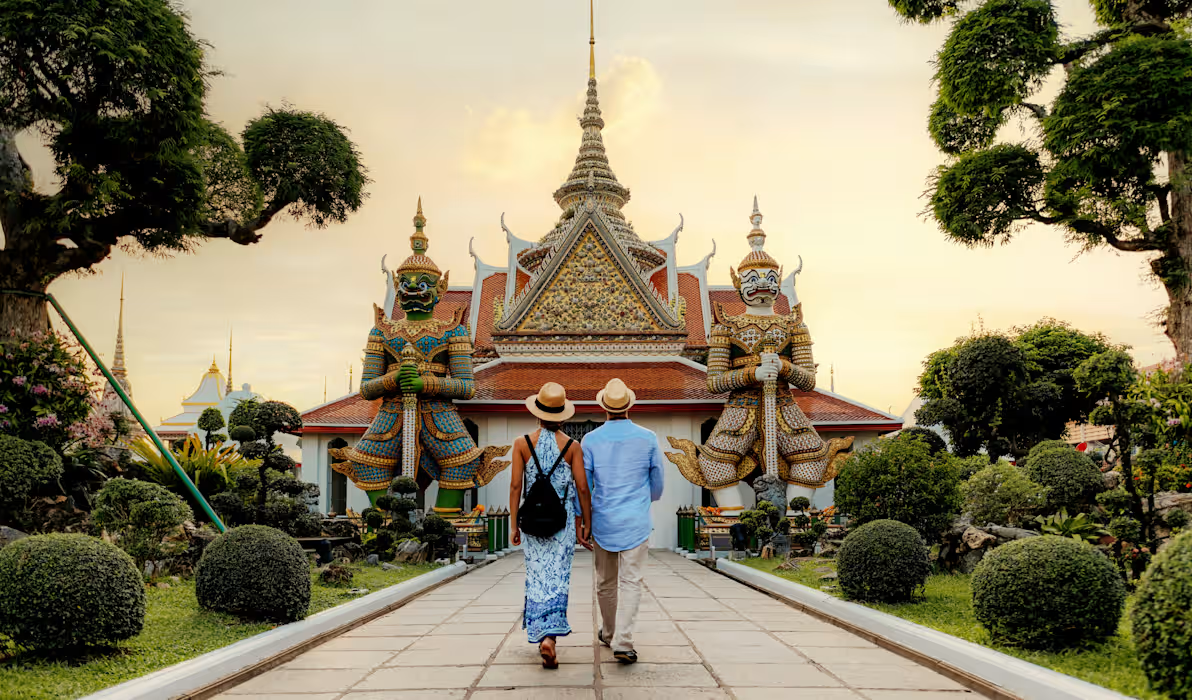
This is ideal for travelers planning to explore Bangkok, Chiang Mai, Phuket, Krabi, or island destinations without complicated paperwork.
When You Need a Thailand Tourist Visa
If you plan to stay longer, enter multiple times, or your nationality is not eligible for visa exemption, a Thailand tourist visa may be required.
Thailand also offers an e-visa system, allowing travelers to apply online before arrival. This is especially helpful for those entering through land borders or planning extended stays.
Entry Requirements in Thailand
Thailand immigration officers are generally relaxed, but travelers should still be prepared with:
-
A passport valid for at least six months
-
Proof of onward travel
-
Evidence of accommodation
-
Sufficient funds (rarely checked, but officially required)
Thailand’s visa system works smoothly for tourists who respect stay limits and entry conditions.
Overstays and Why They Matter in Thailand
Thailand takes overstays seriously. Even a one-day overstay results in a fine, and longer overstays can lead to travel bans. First-time travelers should always double-check exit dates and keep track of permitted stay duration.
Cambodia Visa Guide for First-Time Travelers
Cambodia’s Visa-On-Arrival System
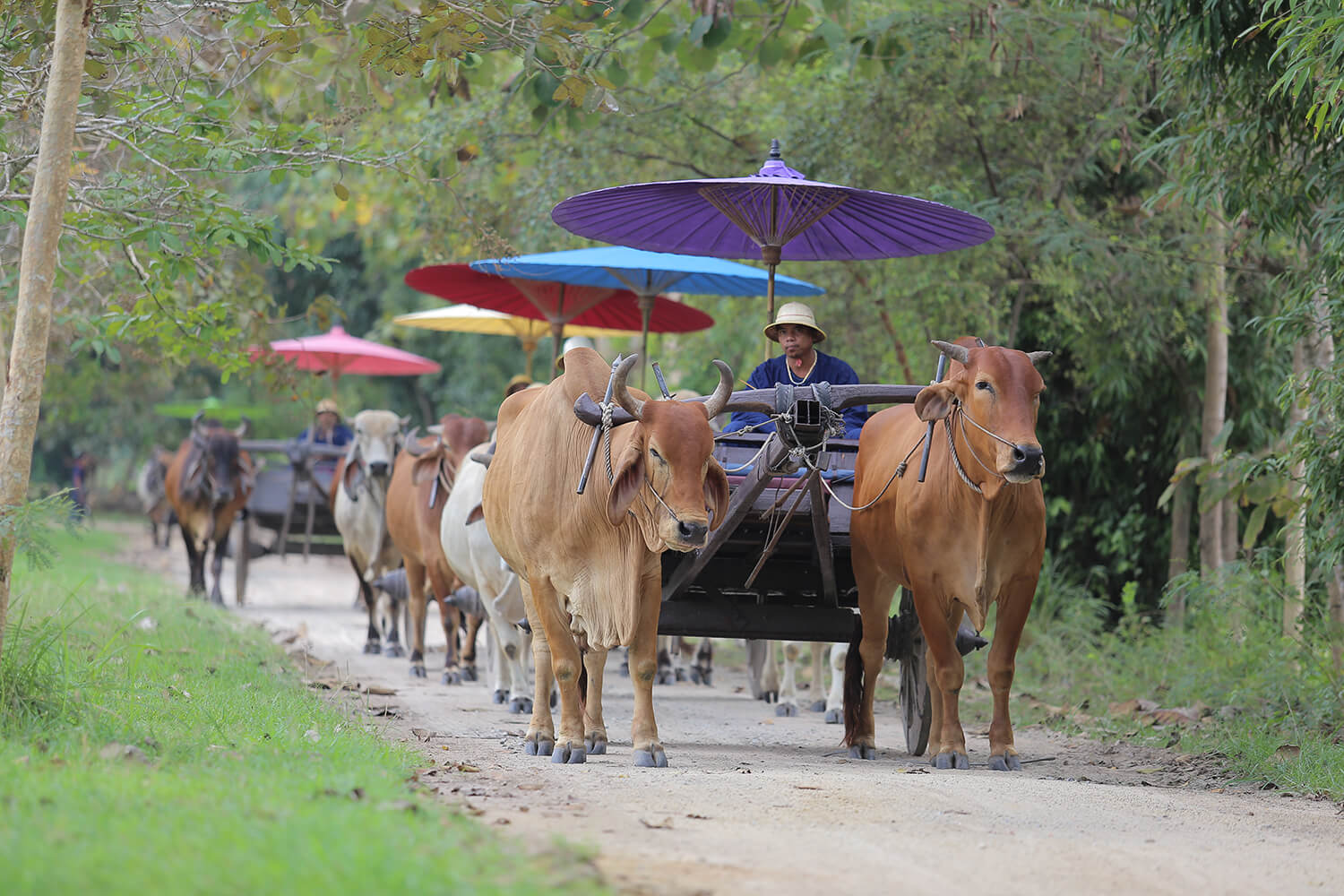
Cambodia is often the easiest country in Southeast Asia for visas. Most nationalities can obtain a Cambodia visa on arrival at international airports and land borders.
This makes Cambodia especially appealing for travelers combining Vietnam and Thailand in one trip.
Cambodia E-Visa Option
For travelers who prefer preparation, Cambodia also offers an e-visa that can be applied for online before arrival.
The Cambodia e-visa:
-
Is valid for tourism
-
Allows a stay of up to 30 days
-
Is accepted at major airports and select land borders
Many first-time travelers choose the e-visa to avoid queues at the airport.
Entry Requirements for Cambodia
To enter Cambodia, travelers should have:
-
A passport valid for at least six months
-
One passport-sized photo (sometimes optional)
-
Visa fee in USD if applying on arrival
-
Accommodation address for immigration forms
Cambodia’s immigration process is generally straightforward and welcoming.
Traveling Between Vietnam, Thailand, and Cambodia
One of the joys of Southeast Asia travel is how easy it is to move between countries. Flights are short, affordable, and frequent. Overland travel is also popular, particularly between Vietnam and Cambodia or Thailand and Cambodia.
However, visas are country-specific. Exiting one country ends that visa, and a new visa is required for the next destination unless visa-free entry applies.
First-time travelers should always check:
-
Whether multiple-entry visas are needed
-
Land border acceptance for e-visas
-
Entry rules for re-entering the same country
Planning visas alongside your itinerary prevents last-minute surprises.
Health, Insurance, and Supporting Documents
Although not officially part of visa requirements, travel insurance is strongly recommended across all three countries. Immigration officers may ask for proof in rare cases, but more importantly, it protects travelers in case of medical emergencies.
Keeping digital copies of all documents — passport, visas, insurance, hotel bookings — makes travel smoother, especially when crossing borders.
Frequently Asked Questions About Vietnam, Thailand & Cambodia Visas
Do I need separate visas for Vietnam, Thailand, and Cambodia?
Yes. Each country has its own visa system, and visas are not interchangeable.
Can I apply for all visas online?
In most cases, yes. Vietnam and Cambodia offer e-visas, and Thailand provides online visa options depending on nationality.
How long can I stay in each country as a tourist?
Vietnam allows stays up to 90 days depending on visa type. Thailand typically allows 30 to 45 days visa-free. Cambodia allows 30 days on a tourist visa.
Can I extend my visa while traveling?
Visa extensions are possible in Vietnam and Cambodia, but rules vary. Thailand extensions are limited and subject to approval.
What happens if I overstay my visa?
Overstaying results in fines and potential travel restrictions. Thailand is particularly strict, while Vietnam and Cambodia also enforce penalties.
Are visas required for children?
Yes. Children require visas unless they are covered under a visa exemption based on nationality.
Is visa on arrival safe and reliable?
Yes, especially in Cambodia. However, applying online in advance reduces waiting time.
Can I re-enter a country on the same visa?
Only if your visa allows multiple entries. Otherwise, a new visa is required.
Visa planning may not be the most exciting part of travel, but it is one of the most important. With the right preparation, entering Vietnam, Thailand, and Cambodia is smooth, welcoming, and stress-free.
These countries reward travelers who arrive informed. Once visas are sorted, the real journey begins — street food adventures, cultural encounters, river cruises, temple visits, and unforgettable human connections.
Ready to explore Southeast Asia without visa stress? Join our expertly curated Vietnam, Thailand & Cambodia journey — seamless planning, authentic experiences, and total peace of mind from start to finish.
Tags: