China River Journey: Pandas, Leshan Buddha & Yangtze Cruise
Overview
This 6-day journey offers a unique blend of wildlife, cultural heritage, and scenic cruising along one of the world’s greatest rivers. Begin in Chengdu, home of the beloved giant pandas, where you’ll visit the renowned Panda Breeding Research Base. Continue to the awe-inspiring Leshan Giant Buddha, the largest stone Buddha statue in the world. Travel to Chongqing, a vibrant riverside city, before boarding a luxurious Yangtze River cruise. Over three days, sail through dramatic landscapes, passing gorges, cliffs, and traditional riverside villages while enjoying onboard comfort and full-board dining. This itinerary is perfect for travelers seeking a relaxing yet culturally rich experience—combining iconic highlights with the timeless beauty of the Yangtze River.
Tour Route Map
TOUR EXPERIENCE AT A GLANCE
- Meet the beloved giant pandas of Chengdu
- Discover the relaxed lifestyle and food culture of Sichuan
- View the monumental 71-metre Leshan Giant Buddha
- Enjoy a scenic boat journey beneath the Buddha’s riverside cliffs
- Travel from Chengdu to dramatic Chongqing
- Explore atmospheric Ciqikou Ancient Town
- Experience Chongqing’s extraordinary mountain-city landscape
- Board a comfortable Yangtze River cruise
- Relax with full-board dining during the cruise
- Discover riverside communities and regional traditions
- Sail through the legendary Qutang, Wu and Xiling Gorges
- Experience the changing landscapes of China’s longest river
- Finish the journey in Yichang, gateway to the Three Gorges region
DAY 1: ARRIVAL IN CHENGDU – WELCOME TO THE RELAXED HEART OF SICHUAN
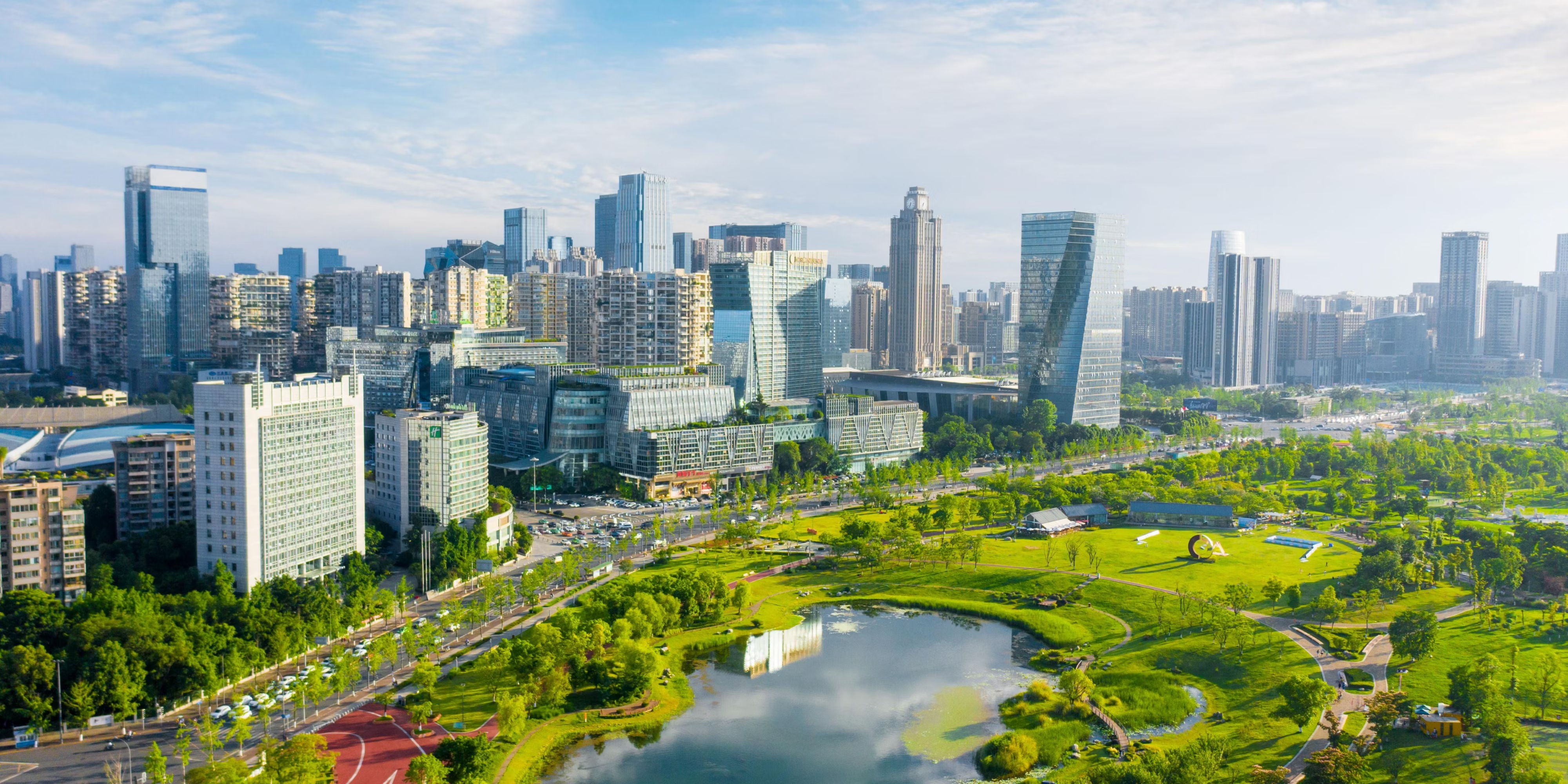
Welcome to Chengdu, capital of Sichuan Province and a city that seems to have perfected the art of enjoying life at its own pace.
Upon arrival at Chengdu International Airport or railway station, meet your private English-speaking guide and transfer to your hotel. Depending on traffic and your arrival point, the drive into the city generally takes around 30–40 minutes.
At first glance, Chengdu is unmistakably modern, with broad avenues, contemporary buildings and an efficient transport system. Yet beneath this metropolitan surface lies a distinctly relaxed personality. Tree-lined neighbourhoods, public parks, traditional teahouses and small restaurants remain an important part of daily life.
Unlike cities where sightseeing begins immediately with grand monuments, Chengdu is best introduced slowly.
After checking into your hotel, take some time to rest following your journey. Depending on your arrival schedule, you may later join your guide for a gentle exploration of Jinli Ancient Street.
Decorated with red lanterns and traditional wooden façades, Jinli recreates the atmosphere of historic Sichuan and is particularly lively in the late afternoon and evening. Narrow pedestrian lanes pass handicraft shops, snack stalls, courtyards and small restaurants, giving you an easy first taste of the region’s cultural character.
Pause to watch artisans practising traditional crafts or try a few local snacks. Chengdu is famous for Sichuan cuisine, but its food culture is much broader than simply spicy dishes. Dumplings, noodles, sesame flavours, aromatic sauces and delicate snacks all play an important role.
Travellers interested in local life may also choose to spend some time in a traditional Chengdu teahouse. Tea drinking here is not merely refreshment; it is a social institution. Friends gather for long conversations, neighbours play cards or mahjong, and people sit beneath shady trees watching the rhythm of the city unfold around them.
These quiet observations provide an important introduction to Sichuan culture.
Rather than trying to see everything on the first day, tonight is about becoming comfortable with Chengdu’s slower rhythm. Enjoy dinner independently, perhaps beginning gently before tackling the famous Sichuan hotpot later in the trip.
Return to your hotel for a good night’s rest.
Tomorrow morning, one of China’s most memorable wildlife encounters awaits: the giant pandas.
Meals: None
Accommodation: Hotel in Chengdu
Tour Highlights: Chengdu arrival, Jinli Ancient Street, Sichuan lifestyle and traditional teahouse culture
DAY 2: CHENGDU GIANT PANDAS – LESHAN GIANT BUDDHA & RIVERSIDE HERITAGE
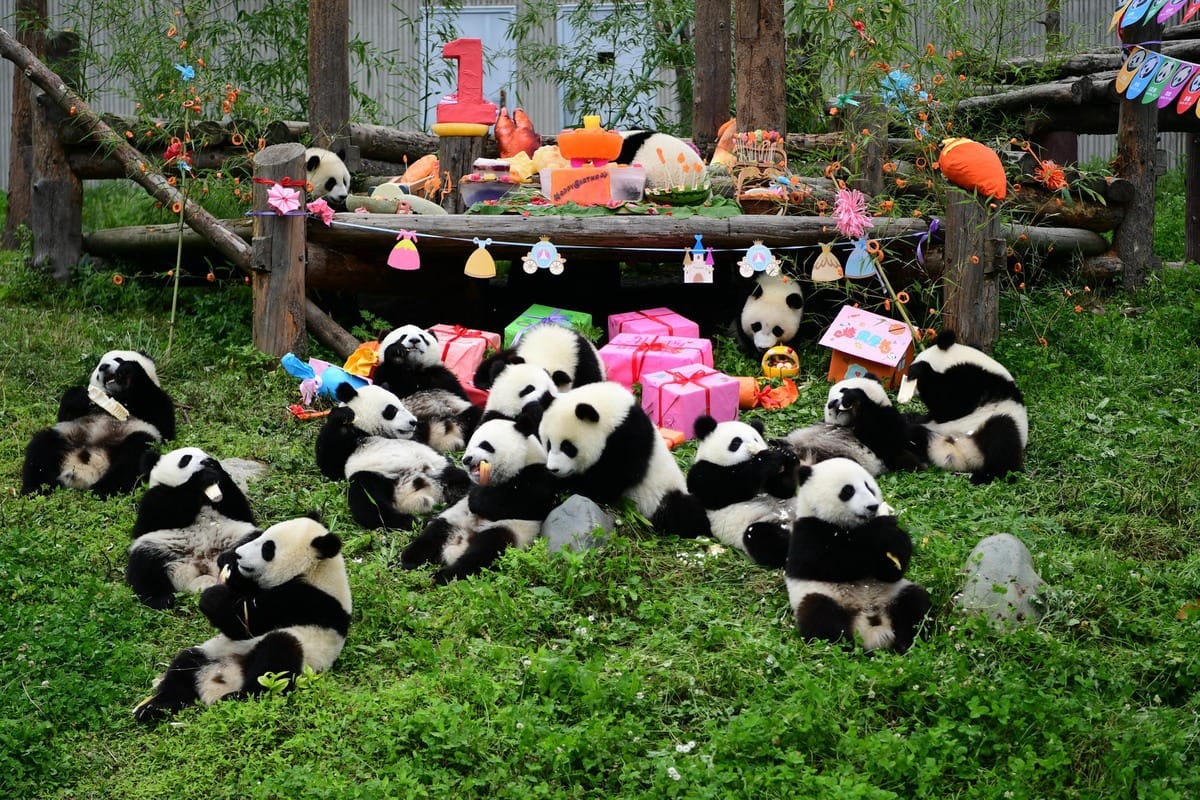
Begin the day early and travel to the Chengdu Research Base of Giant Panda Breeding, one of the world’s best-known centres dedicated to the conservation, breeding and study of giant pandas.
Morning is an especially rewarding time to visit. As temperatures remain cooler, the pandas are often more active, eating bamboo, moving between their enclosures or climbing wooden structures.
Walking through landscaped bamboo gardens and shaded pathways, you will have opportunities to observe these remarkable animals while learning more about their behaviour, natural habitat and conservation.
The giant panda has become one of the most recognisable symbols of China, yet behind its endearing appearance lies a fascinating survival story. Pandas depend heavily on bamboo forests and spend much of their day eating to obtain enough energy from their specialised diet.
Depending on seasonal conditions and animal activity, you may also see younger pandas or red pandas in designated areas.
After your visit, leave Chengdu and travel approximately two hours south towards Leshan, where the landscape gradually opens into a region shaped by hills and powerful rivers.
Here stands one of China’s most extraordinary Buddhist monuments: the Leshan Giant Buddha.
Carved directly into a sandstone cliff during the Tang Dynasty, the colossal seated Buddha rises approximately 71 metres above the confluence of the Minjiang, Dadu and Qingyi rivers.
Construction began more than twelve centuries ago. According to tradition, the monk associated with the project hoped the presence of the Buddha would calm dangerous river currents that threatened passing boats.
Rather than limiting the experience to a viewpoint above the cliffs, board a local boat and travel onto the river.
From the water, the full scale of the monument becomes clear.
As the boat approaches, the Buddha gradually emerges from the landscape—enormous feet resting beside the water, hands positioned calmly upon the knees and a serene face overlooking the meeting of the rivers.
This perspective also reveals how closely the sculpture was designed in relation to the surrounding cliffs, forest and waterways.
There is something remarkably peaceful about seeing the Buddha from the river. Despite its immense dimensions, the figure does not dominate the landscape so much as become part of it.
After enjoying the scenery and learning about the religious and engineering significance of the site, return to Chengdu in the late afternoon.
Tonight is an excellent opportunity to experience Sichuan hotpot, perhaps with a divided pot offering both spicy and mild broths.
Meals: Breakfast
Accommodation: Hotel in Chengdu
Travel: Approximately 2 hours each way between Chengdu and Leshan
Tour Highlights: Giant pandas, conservation experience, Leshan Giant Buddha, Buddhist heritage and river boat journey
DAY 3: CHENGDU – CHONGQING – CIQIKOU – BOARD THE YANGTZE RIVER CRUISE
After breakfast, check out of your Chengdu hotel and transfer to the railway station for your journey to Chongqing.
Travel by high-speed train, normally taking approximately 1.5–2 hours depending on the selected service.
The journey introduces another face of modern China. Within a relatively short distance, you leave Chengdu’s broad plains and relaxed neighbourhood atmosphere and arrive in a city shaped dramatically by hills, rivers and vertical development.
Welcome to Chongqing.
Built around the confluence of the Yangtze and Jialing rivers, Chongqing is one of China’s most extraordinary urban environments. Buildings climb steep slopes, bridges stretch across broad waterways and roads appear at several different levels of the same neighbourhood.
Meet your local guide upon arrival and begin with a visit to Ciqikou Ancient Town.
Once a riverside commercial settlement connected with regional trade, Ciqikou retains narrow stone-paved streets, traditional-style buildings, teahouses, snack stalls and craft shops.
The old lanes offer an interesting contrast with the enormous modern city surrounding them.
Walk through the pedestrian streets and observe local food vendors preparing Chongqing specialities. Aromas of chilli, sesame, grilled ingredients and freshly cooked noodles drift between the shops.
Continue towards Jiefangbei, the commercial centre of downtown Chongqing.
Surrounded by shopping centres, restaurants and modern towers, the district demonstrates just how quickly the atmosphere can change within this city—from narrow historic lanes to intensely contemporary urban life.
Depending on timing, enjoy a short orientation of the riverside city before continuing to the cruise terminal.
In the late afternoon or early evening, transfer to the pier and board your Yangtze River cruise ship.
After completing embarkation formalities, settle into your cabin and explore the vessel. Locate the restaurant, observation decks and common areas before attending any scheduled welcome or safety briefing.
As the ship prepares to leave Chongqing, step onto the outdoor deck.
The city is particularly impressive after sunset. Towers climb the surrounding hills while bridges and riverside buildings illuminate the darkness.
Gradually, the urban skyline begins to recede.
The noise and energy of Chongqing fade behind you, replaced by the steady movement of the ship and the quieter rhythm of the river.
The character of the journey changes tonight.
For the next several days, there is no need to chase the scenery.
Instead, the landscape will come slowly towards you.
Meals: Breakfast; dinner according to cruise embarkation schedule
Accommodation: Yangtze River cruise cabin
Travel: Chengdu – Chongqing by high-speed train
Tour Highlights: Chongqing, Ciqikou Ancient Town, Jiefangbei and Yangtze cruise embarkation
DAY 4: YANGTZE RIVER CRUISE – RIVERSIDE LANDSCAPES, CULTURE & THE ART OF SLOW TRAVEL
Wake to an entirely different China.
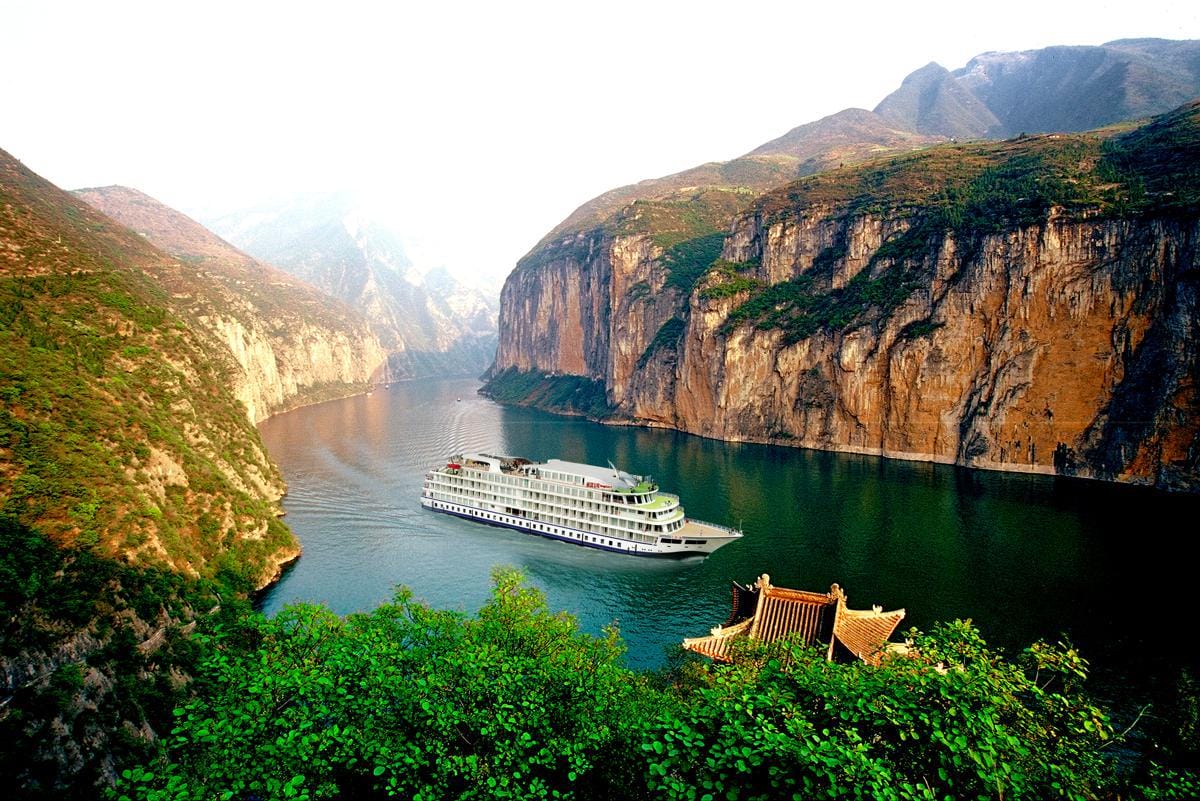
Beyond your cabin window, the dense urban landscape of Chongqing has disappeared, replaced by broad water, green hills, distant villages and the changing geography of the Yangtze River.
Enjoy breakfast on board as the cruise continues downstream.
The Yangtze is more than a scenic river. Stretching thousands of kilometres across China, it has shaped settlement, agriculture, transportation, commerce and cultural identity for countless generations.
Travelling by cruise allows you to appreciate this relationship at a pace that modern road and rail journeys rarely permit.
There is no need to rush this morning.
Step onto the observation deck, find a quiet place and watch the landscape pass.
Fishing boats, cultivated hillsides, small riverside settlements and modern infrastructure occasionally appear along the banks, reminding you that the Yangtze remains both a historic waterway and a living economic corridor.
Depending on the confirmed cruise operator and seasonal schedule, today’s programme normally includes a shore excursion to a cultural or historical attraction.
Possible destinations vary between cruise companies and may include traditional riverside towns, temples, fortifications or heritage areas associated with the communities of the upper Yangtze.
Some additional excursions may also be offered as optional activities at extra cost.
Whatever the specific destination, stepping ashore adds another dimension to the river journey.
It allows you to move beyond simply admiring the landscape and discover how local communities have developed traditions in response to mountains, waterways and trade.
Return to the ship for lunch and continue downstream.
The afternoon is deliberately unhurried.
Depending on the vessel, onboard activities may include Chinese calligraphy, tai chi, cultural talks, tea demonstrations or presentations about the Yangtze and Three Gorges region.
Participation is entirely optional.
Perhaps the greatest luxury of a river cruise is simply having permission to do very little.
Sit with a cup of tea, photograph the river from the deck or watch successive valleys open ahead of the ship before closing behind it.
As evening approaches, the mountains become darker silhouettes and lights begin appearing along the riverbanks.
Enjoy dinner on board and another peaceful evening on the Yangtze.
Tomorrow, the scenery becomes increasingly dramatic as the ship enters the legendary Three Gorges.
Meals: Breakfast, Lunch, Dinner
Accommodation: Yangtze River cruise cabin
Tour Highlights: Yangtze scenery, shore excursion, onboard cultural activities and relaxed river cruising
DAY 5: YANGTZE RIVER CRUISE – THROUGH THE LEGENDARY THREE GORGES
Rise early and step outside.
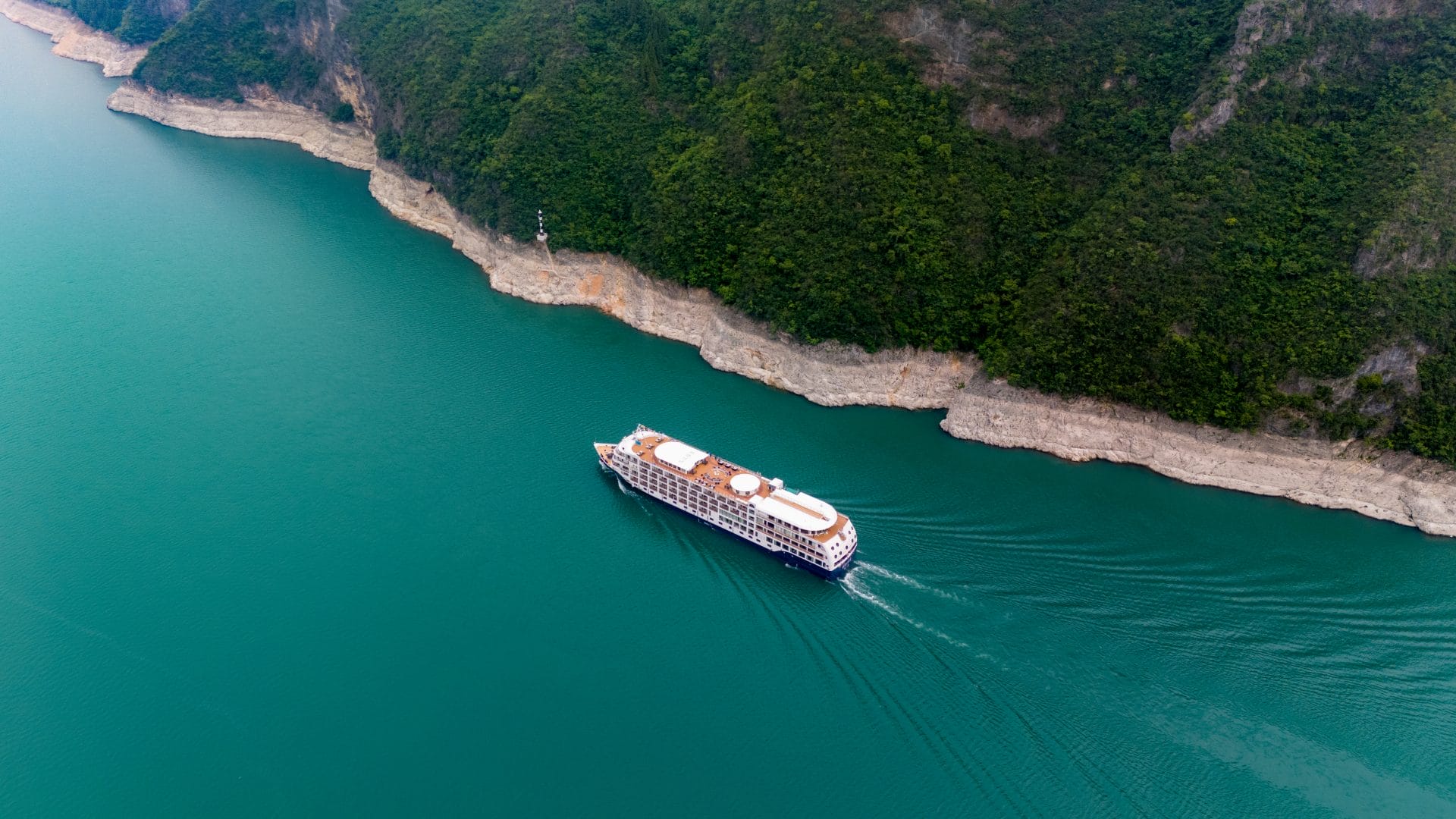
Today is the scenic climax of your Yangtze River journey as the ship passes through the legendary Three Gorges: Qutang Gorge, Wu Gorge and Xiling Gorge.
For generations, these landscapes have occupied a special place in Chinese poetry, painting and literature.
Here, the river narrows between mountains, cliffs rise almost directly from the water and clouds often drift around the peaks.
Begin with Qutang Gorge, the shortest of the Three Gorges but arguably the most dramatic.
Massive mountains appear to close around the ship as the Yangtze passes through a narrow natural gateway. The compressed landscape gives the gorge a powerful sense of scale.
Stand on the outdoor deck as steep rock faces move slowly past. Photographs capture some of the scene, but it is the feeling of travelling between those towering cliffs that tends to remain in memory.
Continue into Wu Gorge, famous for its elegant mountain scenery and mist-covered peaks.
Compared with Qutang’s dramatic entrance, Wu Gorge often feels softer and more mysterious. Layers of mountains disappear into the distance while clouds move through valleys above the water.
The scenery has inspired Chinese artists and poets for centuries precisely because it changes constantly with light, mist and weather.
Depending on the cruise programme, today’s journey may include an excursion by smaller boat into one of the Yangtze’s tributaries.
Possible experiences include the Lesser Three Gorges, Shennong Stream or another scenic tributary selected by the cruise company.
Smaller vessels allow travellers to move into narrower waterways where the cliffs seem closer, vegetation becomes denser and the scale of the landscape feels more intimate.
Return to the main ship and continue through the Three Gorges region.
Later comes Xiling Gorge, historically known for its challenging currents and dramatic terrain. Today, navigation is very different, but the surrounding mountains still reveal why this section of the river held such importance for generations of boatmen and traders.
The wider landscape has also been profoundly influenced by the construction of the Three Gorges Dam, one of the largest hydroelectric projects ever undertaken.
Your cruise team may provide information about how the project changed navigation, water levels, energy generation and communities along the river.
Throughout the day, enjoy full-board meals and available onboard activities.
But scenery remains the main event.
As evening falls, enjoy your final night aboard the cruise.
The Yangtze has carried you slowly from the immense mountain city of Chongqing towards Yichang, revealing a side of China that can only truly be appreciated from the water.
Meals: Breakfast, Lunch, Dinner
Accommodation: Yangtze River cruise cabin
Tour Highlights: Qutang Gorge, Wu Gorge, Xiling Gorge, tributary excursion and Three Gorges landscapes
DAY 6: YICHANG – DISEMBARKATION & FAREWELL TO THE YANGTZE
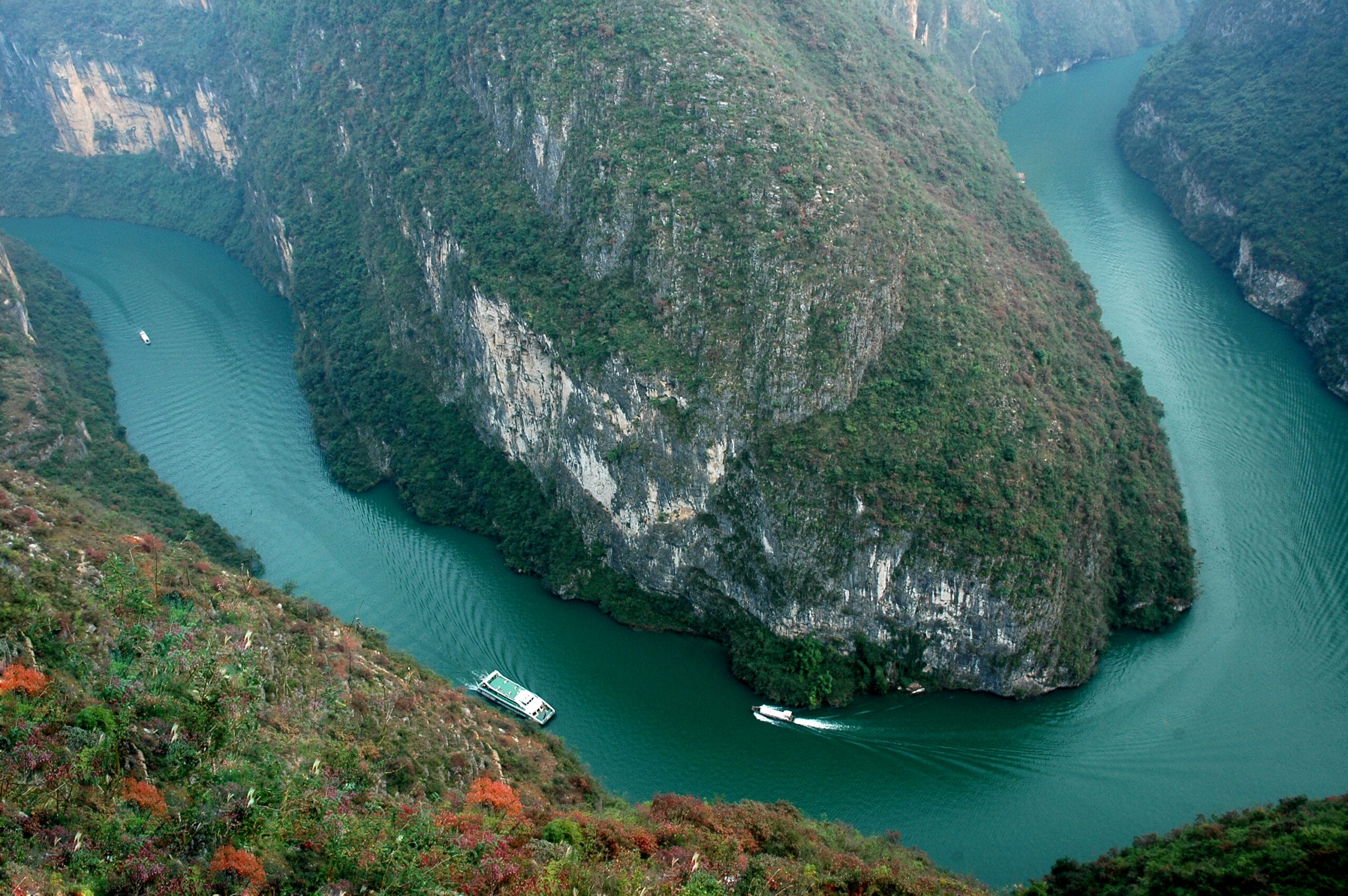
Wake for your final morning on the river and enjoy breakfast as the cruise approaches Yichang, traditionally regarded as the eastern gateway to the Three Gorges.
Depending on the confirmed ship and cruise schedule, the final morning may include sightseeing associated with the Three Gorges Dam before disembarkation.
The dam represents a striking final contrast to the natural and historical landscapes experienced during the previous days.
For centuries, human communities adapted themselves to the Yangtze.
Here, on an extraordinary scale, modern China has attempted to reshape the behaviour of the river itself.
Viewing areas and interpretive displays may provide insight into the scale of the project, hydroelectric power generation, navigation systems and the wider role the dam plays in the region.
Following completion of the cruise programme, disembark in the Yichang area and meet your local transfer team.
Private transportation will take you to Yichang Airport or railway station for your onward journey.
As the tour concludes, it is worth reflecting on how much variety has been compressed into only six days.
Chengdu introduced you gently to Southwest China through bamboo gardens, giant pandas and a local culture in which tea, food and conversation remain central to everyday life.
At Leshan, a monumental Buddha carved into a cliff revealed another dimension—the depth of Buddhist history and the longstanding relationship between spiritual belief and the powerful rivers of Sichuan.
Chongqing then changed the atmosphere completely.
One of China’s most dramatic cities rose vertically above the Yangtze and Jialing rivers, combining old neighbourhoods with bridges, towers and seemingly impossible urban engineering.
And then everything slowed down.
Once aboard the cruise, China no longer appeared as a sequence of attractions.
It became a moving landscape.
Villages slipped quietly past the windows. Mountains emerged from morning mist. Enormous cliffs narrowed around the ship as you entered the Three Gorges.
The Yangtze revealed itself not simply as a geographical feature, but as a thread connecting communities, trade routes, legends, landscapes and generations of Chinese history.
Your China River Journey ends today in Yichang, but its strongest memories are likely to remain remarkably simple: a panda sitting quietly among bamboo, the calm face of the Leshan Buddha above the river, Chongqing illuminated at night and the silent walls of the Three Gorges rising around your ship.
Meals: Breakfast
Accommodation: None
Service: Cruise disembarkation and private departure transfer
Tour Conclusion: End of services
End of the trip!
FREQUENTLY ASKED QUESTIONS
Is six days enough for Chengdu and a Yangtze River cruise?
Yes. The itinerary has been designed as a compact journey combining Chengdu’s most important highlights, Leshan Giant Buddha, a short Chongqing experience and a multi-night Yangtze River cruise without unnecessary backtracking.
What is the best time of year for the Yangtze River cruise?
Spring and autumn are especially popular because temperatures are generally comfortable. Cruises also operate during other seasons, although weather, visibility and river conditions naturally vary.
Can visitors hold or touch the pandas?
Standard visitors cannot normally hold or touch giant pandas. Observation is conducted according to the conservation centre’s animal-welfare regulations.
How tall is the Leshan Giant Buddha?
The Leshan Giant Buddha is approximately 71 metres tall and is carved directly into a cliff overlooking the confluence of three rivers.
Why does the itinerary use a boat to see Leshan Giant Buddha?
The river provides an excellent perspective from which to appreciate the entire monument and surrounding cliffs. It also avoids some of the more demanding stairs associated with exploring the site on foot.
Do Yangtze cruise cabins have private bathrooms?
Standard cabins on established cruise ships normally include private bathroom facilities. Many vessels also offer private balconies, although facilities vary between ships and cabin categories.
Can we request a balcony cabin?
Yes. Balcony cabins are commonly available on modern Yangtze cruise vessels and are particularly worthwhile for travellers who enjoy watching the scenery privately.
Are meals included during the cruise?
Full-board meals are normally included during the principal cruise days. Meals on embarkation and disembarkation days depend on the cruise schedule.
What type of food is served on board?
Cruise restaurants normally serve Chinese cuisine together with some international-style dishes. Exact menus depend on the cruise company and ship category.
Can vegetarian food be arranged?
Yes, with advance notice. Guests should provide detailed dietary requirements before arrival so the cruise company and local restaurants can prepare appropriately.
Can gluten-free meals be arranged?
Some gluten-free requirements may be accommodated, but strict gluten-free dining can be difficult because soy sauce, wheat-based products and shared preparation areas are widely used.
Is the Yangtze cruise suitable for senior travellers?
Yes. A river cruise is particularly attractive for older travellers because much of the scenery can be enjoyed directly from the ship. However, shore excursions may involve stairs, slopes or uneven surfaces.
Is this tour suitable for children?
Yes. Pandas, boat journeys and cruise scenery make the itinerary enjoyable for families. Parents should supervise younger children on outdoor decks and during shore excursions.
Is there Wi-Fi aboard the cruise?
Most modern cruise ships provide some form of internet access, although connection quality and access policies vary. Mobile coverage may also become weaker in mountainous sections.
What should we pack for the Yangtze cruise?
Comfortable walking shoes, layered clothing, a light waterproof jacket, sun protection, personal medication, camera equipment and a small daypack are recommended.
Can this tour be extended after Yichang?
Yes. Popular extensions include Zhangjiajie, Shanghai, Beijing, Xi’an, Guilin or additional destinations along the Yangtze.
Can we add more time in Chengdu?
Yes. Extra nights can be added for Sichuan Opera, cooking experiences, teahouse culture, Mount Qingcheng, Dujiangyan or a more relaxed exploration of the city.
Can we upgrade the Yangtze cruise?
Yes. Different vessels and cabin categories can be quoted according to your preferred comfort level and travel budget.