Ultimate China Journey 13 Days: Beijing, Xi’an, Zhangjiajie, Guilin & Shanghai
Overview
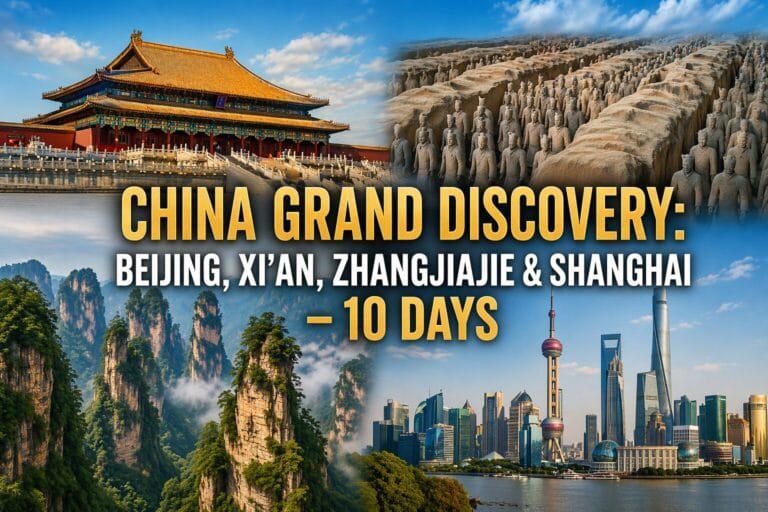
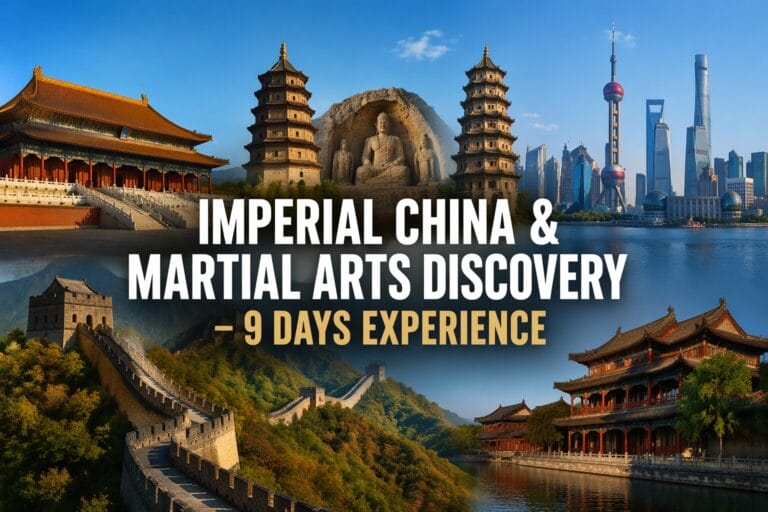
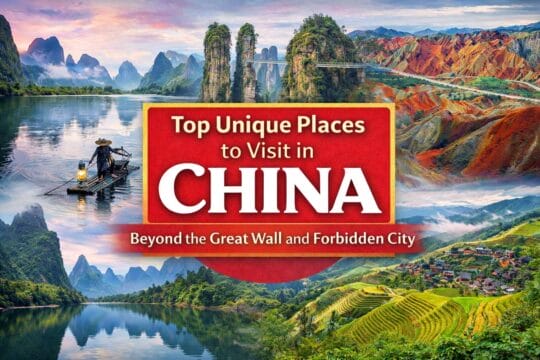
This 13-day grand journey reveals the full diversity of China—from imperial capitals to surreal natural landscapes and vibrant modern cities. Begin in Beijing, exploring the Great Wall and Forbidden City, before continuing to Xi’an, home of the legendary Terracotta Army. Journey onward to Zhangjiajie, where dramatic sandstone pillars inspired the floating mountains of Avatar, and experience breathtaking highlights such as Tianmen Mountain and the Glass Bridge. Continue to Guilin, where the serene Li River winds through some of China’s most picturesque countryside. Conclude in Shanghai, a dynamic metropolis blending colonial elegance with futuristic skylines. This itinerary offers a perfect balance of culture, history, nature, and modern life—ideal for travelers seeking a comprehensive and unforgettable China experience.
Tour Route Map
TOUR EXPERIENCE AT A GLANCE
- Walk along the legendary Great Wall of China
- Explore Tiananmen Square and the Forbidden City
- Discover the classical beauty of the Summer Palace
- Meet the silent army of the Terracotta Warriors
- Experience Xi’an’s vibrant Muslim Quarter
- Enter the surreal landscapes of Zhangjiajie National Forest Park
- Ride the spectacular Bailong Elevator
- Walk across the famous Zhangjiajie Glass Bridge
- Ascend Tianmen Mountain by cable car
- Discover the iconic Heaven’s Gate
- Cruise through the breathtaking scenery of the Li River
- Explore the relaxed riverside atmosphere of Yangshuo
- Experience Chinese tea culture in Guilin
- Discover Shanghai’s historic Bund and futuristic Pudong skyline
- Travel comfortably by domestic flights and high-speed rail
DAY 1: ARRIVAL IN BEIJING – THE BEGINNING OF A GRAND CHINA JOURNEY
Welcome to Beijing, China’s historic capital and the starting point of an extraordinary journey through some of the country’s most important cultural and natural landscapes.
Upon arrival at Beijing International Airport, meet your private English-speaking guide and transfer to your hotel. Depending on traffic and your arrival airport, the journey into the city generally takes around 45–60 minutes.
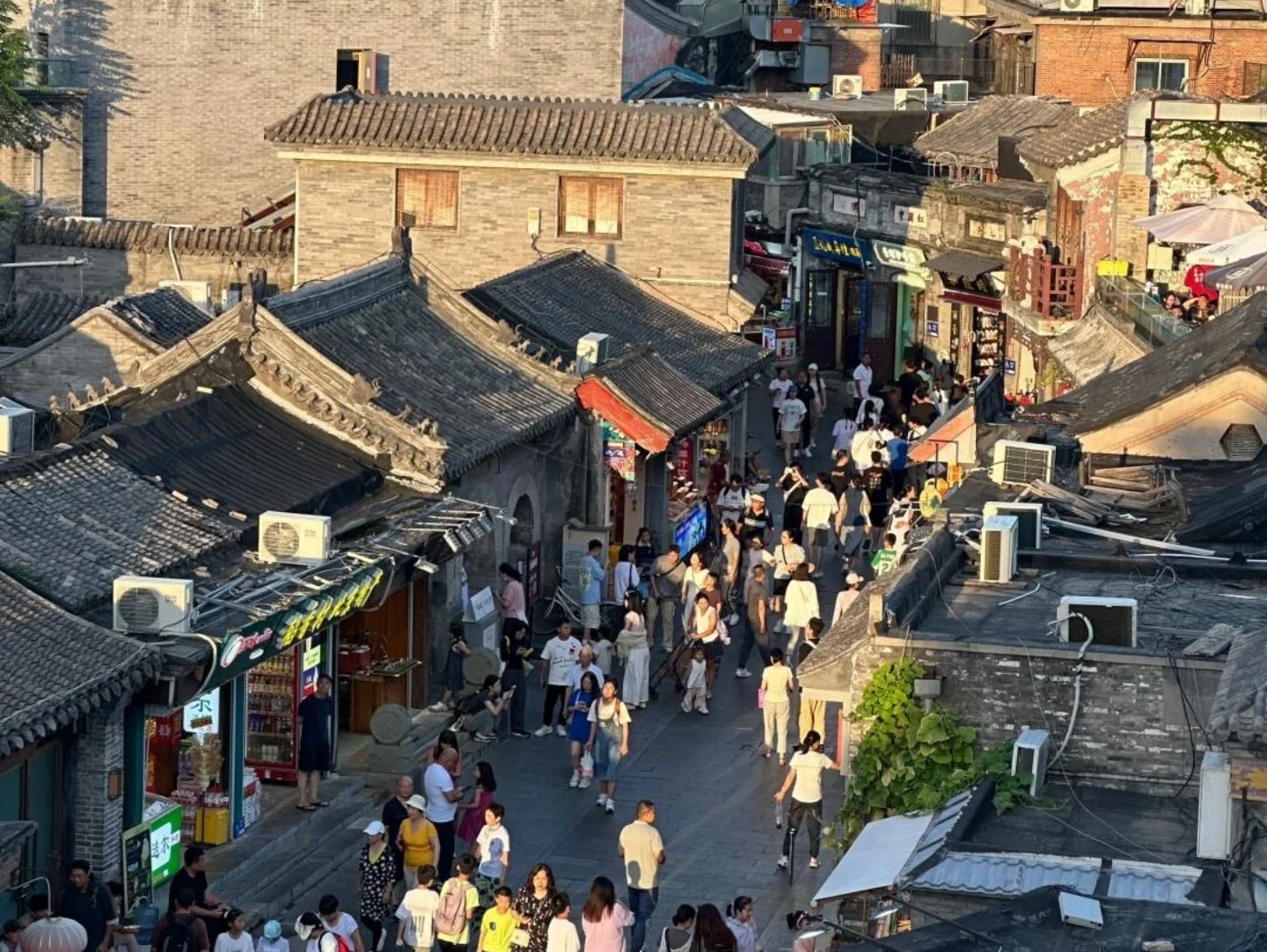
As you travel towards central Beijing, the first impressions are often a fascinating mixture of scale and contrast. Broad avenues, modern commercial districts and contemporary architecture sit alongside traditional neighbourhoods, temple roofs and old hutong alleyways that still preserve traces of the capital’s earlier life.
Beijing has stood at the political centre of China for more than eight centuries. Emperors governed from here, scholars entered the imperial bureaucracy, armies defended the northern approaches and generations of ordinary residents built communities around narrow courtyard streets.
After checking into your hotel, the rest of the day is deliberately left light.
This allows you to recover from the international journey, adjust to the local time and ease gently into China rather than beginning with an exhausting sightseeing programme.
Depending on your arrival time, you may take a short independent walk around the hotel neighbourhood.
Beijing’s public spaces offer fascinating glimpses of daily life. In parks and residential areas, local residents gather to practise tai chi, dance, play cards, exercise or simply sit together talking beneath the trees.
Travellers arriving early may also consider an optional stroll through a traditional hutong district, where narrow lanes weave between grey-brick courtyard houses.
These neighbourhoods provide an intimate contrast to the monumental Beijing you will experience during the following two days.
For dinner, you may choose something simple close to the hotel or begin the journey with one of Beijing’s most famous culinary traditions: Peking duck.
Tonight is about settling in and allowing anticipation to build.
Tomorrow, the road leads north towards one of humanity’s most extraordinary architectural achievements—the Great Wall of China.
Meals: None
Accommodation: Hotel in Beijing
Tour Highlights: Beijing arrival, private airport transfer, first impressions of China and optional hutong exploration
DAY 2: BEIJING – GREAT WALL OF CHINA & CULTURAL TRADITIONS
After breakfast, leave central Beijing and travel towards the mountains north of the city.
Today brings your first major encounter with China’s imperial history: the Great Wall at Juyong Pass.
Located within a dramatic valley surrounded by rugged mountain ridges, Juyong Pass historically served as one of the most important defensive gateways protecting Beijing from armies approaching from the north.
The drive usually takes around 1.5–2 hours, depending on traffic.
As you approach the mountains, the urban landscape gradually disappears. Soon, sections of the Wall begin to emerge across the ridgelines.
Walking onto the stone ramparts is a powerful moment.
The Wall climbs sharply over the surrounding terrain, linking defensive towers and fortified gateways while following the natural contours of the mountains.
Your guide will explain that the Great Wall was never a single structure built at one moment in history. Instead, different Chinese states and dynasties constructed and reinforced defensive systems over many centuries.
The sections most familiar today were largely strengthened during the Ming Dynasty, when brick walls, watchtowers and military garrisons formed an extensive northern defence network.
Take time to walk at your own pace.
Some travellers may prefer to climb towards higher watchtowers, while others may simply enjoy the mountain views from the lower sections.
Either way, the experience offers far more than a famous photograph.
Standing on the Wall gives a genuine sense of the immense human effort, military organisation and geographical challenges involved in its construction.
After leaving Juyong Pass, return towards Beijing and stop at a traditional jade workshop.
Jade has been valued in China for thousands of years and traditionally symbolises purity, moral integrity, protection and social status.
Observe artisans shaping and polishing the stone while your guide explains the cultural meanings attached to different forms and colours.
Later, make a photo stop at the Beijing National Stadium, popularly known as the Bird’s Nest, and the nearby Water Cube.
These bold modern structures were created for the 2008 Olympic Games and provide a striking visual contrast to the ancient defensive architecture visited earlier.
Return to your hotel in the late afternoon.
This evening is free for relaxation or an optional local dinner.
Meals: Breakfast
Accommodation: Hotel in Beijing
Tour Highlights: Juyong Pass Great Wall, mountain scenery, jade craftsmanship and Beijing Olympic landmarks
DAY 3: BEIJING – TIANANMEN SQUARE, FORBIDDEN CITY & SUMMER PALACE
Today reveals the ceremonial and political heart of imperial China.
Begin at Tiananmen Square, one of the world’s largest public squares and an important symbolic centre of modern China.
The immense scale of the space is immediately striking.
From here, walk towards the monumental entrance of the Forbidden City, once the exclusive domain of China’s emperors and their courts.
For nearly five hundred years, the palace complex served as the political and ceremonial centre of the Ming and Qing dynasties.
Passing through the enormous gates, you enter a carefully organised world of courtyards, marble terraces, ceremonial halls and private residential areas.
The architectural layout reflects traditional Chinese ideas of order and hierarchy.
Buildings are arranged along a powerful north–south axis, while colours, roof forms and decorative details communicate status and symbolic meaning.
Red walls traditionally represent happiness and good fortune, while yellow roof tiles were closely associated with imperial authority.
Walk through the grand halls where emperors conducted state ceremonies before continuing towards the quieter inner courts where members of the imperial household lived.
Your guide will bring the palace to life with stories of dynastic politics, royal rituals, court officials and the extraordinary daily routines that took place behind these walls.
In the afternoon, travel to the Summer Palace.
The atmosphere changes immediately.
Where the Forbidden City feels formal and monumental, the Summer Palace is graceful and contemplative.
Built around Kunming Lake and Longevity Hill, the complex combines pavilions, temples, gardens, bridges and wooded slopes according to classical Chinese landscape principles.
Walk along part of the famous Long Corridor, whose painted beams contain thousands of scenes inspired by history, landscapes and mythology.
Pause beside the lake and admire the way architecture appears to merge naturally with water and mountains.
The Summer Palace reflects an important Chinese artistic ideal: human design should complement rather than overwhelm nature.
Later, visit Hongqiao Market, where the atmosphere changes once again.
Colourful stalls and shops offer clothing, handicrafts, souvenirs and everyday goods, allowing you to experience a more informal and lively side of Beijing.
Return to the hotel after a day spanning imperial power, classical aesthetics and modern local life.
Meals: Breakfast
Accommodation: Hotel in Beijing
Tour Highlights: Tiananmen Square, Forbidden City, Summer Palace, Kunming Lake and Hongqiao Market
DAY 4: BEIJING – XI’AN – JOURNEY TO THE ANCIENT SILK ROAD CAPITAL
After breakfast, check out of your Beijing hotel and transfer to the airport or railway station for the journey to Xi’an.
Depending on the confirmed arrangement, travel by domestic flight or high-speed train.
The flight usually takes approximately 2–2.5 hours, while the high-speed railway journey generally takes around 5–6 hours.
Travelling by train offers a fascinating perspective on modern China.
Cities, farmland and provincial landscapes pass rapidly beyond the window, providing a sense of the immense scale of the country and its sophisticated transport infrastructure.
Upon arrival in Xi’an, meet your local guide and transfer to the hotel.
Historically known as Chang’an, Xi’an served as the capital of several major dynasties and became one of the most important cities in the ancient world.
It was also the eastern gateway of the Silk Road.
From here, caravans departed westward carrying silk, tea, ceramics and precious goods. In return, merchants and travellers brought horses, spices, glassware, music, artistic influences and religious ideas from Central Asia and beyond.
Xi’an therefore developed as a remarkably cosmopolitan city long before the concept of globalisation existed.
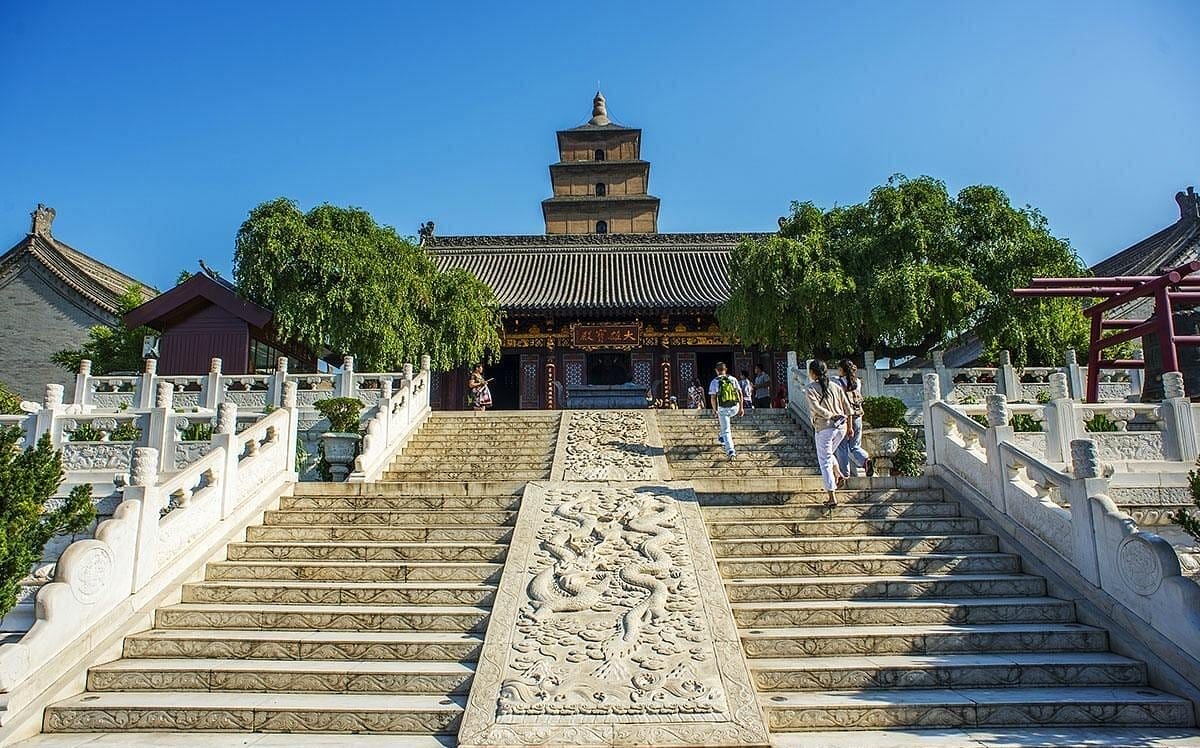
Depending on arrival time, continue to Big Wild Goose Pagoda Square.
The pagoda is closely associated with Xuanzang, the celebrated Buddhist monk who travelled from China to India in the seventh century to study Buddhist teachings and collect sacred texts.
His long journey later inspired stories that became part of Chinese literary tradition.
The surrounding square has become a popular gathering place for local families and visitors.
In the evening, public spaces come alive with people walking, exercising and socialising.
When operating, the musical fountain provides a colourful combination of water, light and music.
This gentle evening experience introduces Xi’an without adding too much physical activity after the journey from Beijing.
Return to your hotel and rest.
Tomorrow, one of archaeology’s greatest discoveries awaits.
Meals: Breakfast
Accommodation: Hotel in Xi’an
Travel: Beijing – Xi’an by flight or high-speed train
Tour Highlights: Historic Silk Road context, Big Wild Goose Pagoda area and local evening life

DAY 5: XI’AN – TERRACOTTA WARRIORS, ANCIENT CITY WALL & MUSLIM QUARTER
Today brings you face to face with one of the most extraordinary archaeological discoveries in the world: the Terracotta Army.
Travel outside Xi’an to the vast burial complex created for Qin Shi Huang, the first emperor to unify China.
Discovered by local farmers in 1974, the site contains thousands of life-sized clay warriors, horses and chariots arranged in military formation.
Entering the principal excavation hall is unforgettable.
Rows of soldiers stand silently beneath the enormous roof, creating the impression of an army still waiting for orders after more than two thousand years.
Look closely and differences begin to emerge.
The warriors have varying hairstyles, facial features, uniforms and military ranks. Infantrymen, archers, cavalry units and officers were carefully positioned according to their role.
Originally, many figures were painted in vivid colours, although much of the pigmentation faded after exposure to air.
Your guide will explain the astonishing scale of the wider mausoleum complex and the political ambition of Qin Shi Huang, whose reign transformed the Chinese states into a unified imperial system.
After the archaeological visit, stop at a traditional crockery or ceramic workshop.
Here, artisans demonstrate how clay can be shaped, decorated and fired, offering a connection between ancient ceramic traditions and contemporary craftsmanship.
Return to central Xi’an for a photo stop or short visit near the impressive Ancient City Wall.
Constructed during the Ming Dynasty, the fortifications remain among the best-preserved city walls in China.
Their broad ramparts, gates and watchtowers once protected the urban centre and continue to define Xi’an’s historic character.
Later, enter the colourful Muslim Quarter.
The narrow streets reveal another layer of Xi’an’s Silk Road heritage.
Chinese and Islamic traditions have blended here for generations, reflected in food, architecture and family businesses.
Street vendors prepare grilled meat, flatbreads, hand-pulled noodles, dumplings, persimmon cakes and roujiamo, often described as a Chinese-style meat sandwich.
The mixture of aromas, languages and bustling local life creates one of the most enjoyable cultural experiences in the city.
Return to your hotel after a day connecting ancient imperial power with Silk Road multiculturalism.
Meals: Breakfast
Accommodation: Hotel in Xi’an
Tour Highlights: Terracotta Warriors, ceramic craftsmanship, Ancient City Wall and Muslim Quarter
DAY 6: XI’AN – ZHANGJIAJIE – FROM ANCIENT CIVILIZATION TO NATURE’S MASTERPIECE
After breakfast, transfer to the airport for your flight to Zhangjiajie, marking one of the most dramatic transitions in the entire journey.
Until now, the tour has focused primarily on human history.
Beijing introduced imperial palaces and defensive architecture. Xi’an revealed ancient armies and Silk Road trade.
Today, the story changes.
The next chapter belongs to the landscape itself.
Zhangjiajie is famous for its extraordinary sandstone pillars, deep ravines, forest-covered mountains and mist-filled valleys.
Thousands of narrow rock formations rise vertically from the terrain, sometimes appearing to float above the clouds.
These surreal landscapes became internationally associated with the visual world of the film Avatar, although their geological history reaches back millions of years.
Upon arrival, meet your local guide and transfer to the hotel.
Depending on your flight time, the remainder of the day is kept relatively light.
This gives you time to rest before the intensive mountain exploration planned for tomorrow.
As you approach the Zhangjiajie region, notice how dramatically the geography differs from the broad urban plains of Beijing and Xi’an.
Mountain ridges rise around the roads, vegetation becomes denser and small settlements appear between limestone and sandstone formations.
The evening is free.
You may enjoy dinner at the hotel or a local restaurant and sample dishes from Hunan Province.
Hunan cuisine is known for strong, aromatic flavours and generous use of chilli, although milder dishes are readily available for international travellers.
Tonight is an excellent opportunity to prepare comfortable walking shoes, camera equipment and layered clothing for tomorrow.
Weather in the mountains can change quickly, and cloud or mist is common.
Interestingly, these conditions often enhance rather than diminish the scenery.
When mist moves between the sandstone pillars, the entire landscape takes on the dreamlike quality seen in traditional Chinese landscape paintings.
Tomorrow brings one of the defining moments of the trip: entering Zhangjiajie National Forest Park and standing among its extraordinary stone towers.
Meals: Breakfast
Accommodation: Hotel in Zhangjiajie
Travel: Domestic flight from Xi’an
Tour Highlights: Scenic transition, Hunan landscapes and introduction to Zhangjiajie
DAY 7: ZHANGJIAJIE – AVATAR MOUNTAINS, TIANZI MOUNTAIN & GLASS BRIDGE
Today is one of the most spectacular days of the entire journey.
Begin your exploration of Zhangjiajie National Forest Park, an extraordinary landscape of sandstone pillars, forested valleys and dramatic mountain scenery.
Enter the scenic area and travel towards Tianzi Mountain.
A cable car carries you upward above dense forests and deep valleys.
As the elevation increases, individual rock formations gradually reveal themselves through the vegetation and mist.
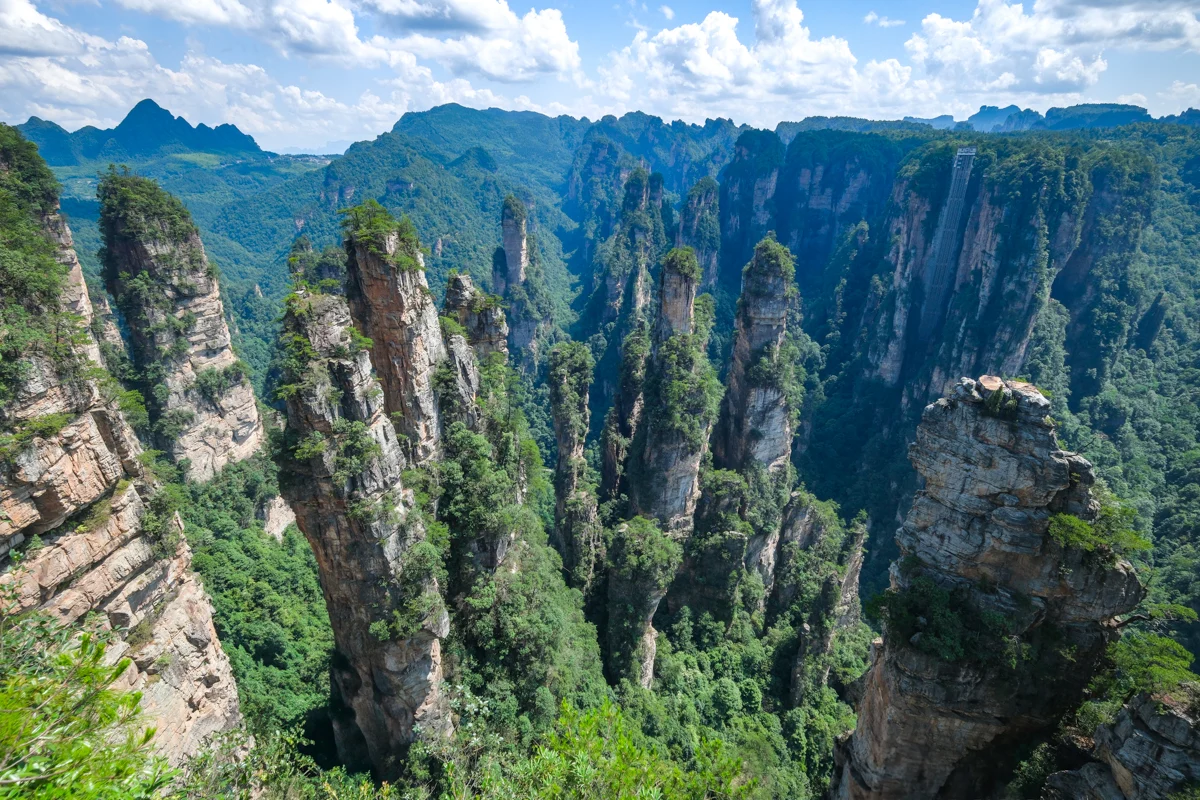
From the viewing platforms at Tianzi Mountain, hundreds of slender sandstone peaks appear to rise from the valleys below.
On clear days, the landscape stretches across an enormous distance.
When clouds gather, isolated pillars seem to float above a white sea of mist.
Continue towards Yuanjiajie, another celebrated section of the park and home to some of Zhangjiajie’s most iconic formations.
The scenery here is closely associated with the “floating mountains” popularised by the film Avatar.
Although the real landscape requires no cinematic comparison, the connection helps visitors appreciate just how unusual these geological formations appear.
One of the day’s most memorable experiences is the Bailong Elevator.
Built against the side of a massive cliff, this extraordinary outdoor lift carries passengers rapidly between the valley floor and the elevated mountain area.
The ride itself is brief, but the engineering achievement and surrounding landscape make it unforgettable.
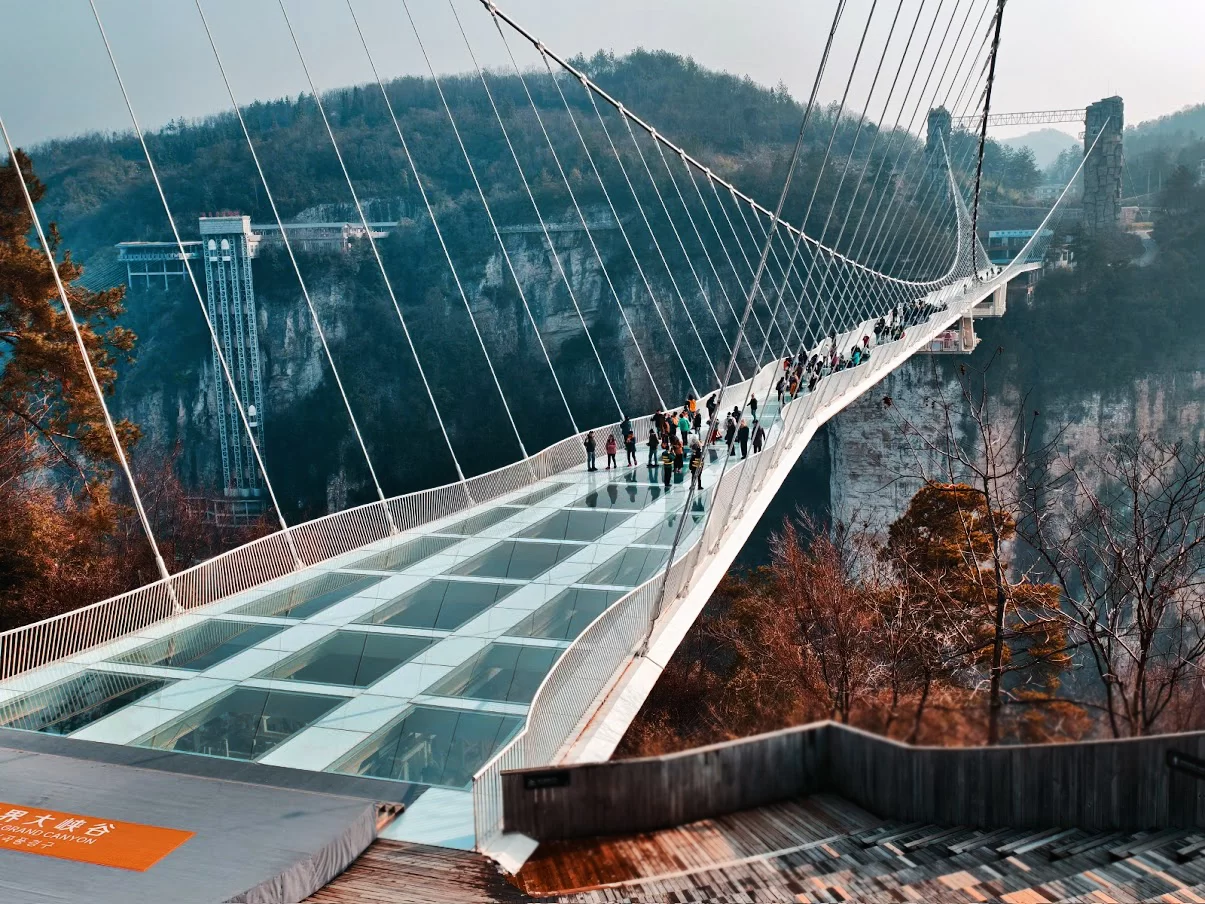
In the afternoon, continue towards Zhangjiajie Grand Canyon and the famous Glass Bridge.
Suspended high above the gorge, the bridge provides a completely different perspective on the landscape.
Looking through the transparent floor towards the valley far below can be exhilarating—or slightly unnerving.
Travellers uncomfortable with heights can simply cross at their own pace and focus on the wider scenery rather than looking directly downward.
From the centre of the bridge, mountain walls rise on both sides while the canyon stretches beneath you.
The experience combines dramatic engineering with natural beauty and has become one of Zhangjiajie’s signature modern attractions.
Return to your hotel in the late afternoon or early evening.
Today has been physically active, but the rewards are exceptional: mountain panoramas, vertical cliffs, forested valleys and some of the most unusual scenery anywhere in China.
Enjoy a well-earned dinner and restful evening.
Meals: Breakfast
Accommodation: Hotel in Zhangjiajie
Tour Highlights: Zhangjiajie National Forest Park, Tianzi Mountain, Yuanjiajie, Bailong Elevator and Glass Bridge
DAY 8: ZHANGJIAJIE – TIANMEN MOUNTAIN, CLIFF WALKWAYS & HEAVEN’S GATE
Today reveals another face of Zhangjiajie at Tianmen Mountain, one of the region’s most dramatic natural landmarks.
Begin by boarding the famous cable car that rises from near the city towards the summit area.
The journey itself is part of the experience.
As the cabin climbs, Zhangjiajie gradually shrinks below and the surrounding mountain landscape opens dramatically around you.
Roads curve across the slopes, valleys deepen and clouds sometimes move beneath the cable car.
At the top, follow a network of mountain paths and elevated walkways built along the cliffs.
Some sections hug the rock face high above the valleys, creating breathtaking perspectives over the surrounding countryside.
Depending on weather conditions and operating arrangements, you may also experience one of the mountain’s glass walkways.
Walking above the transparent surface adds a sense of adventure, but there is no need to rush.
The mountain is best appreciated slowly.
Pause at viewpoints, watch clouds form around the cliffs and listen to the changing sounds of wind and forest.
The symbolic centrepiece of Tianmen Mountain is the enormous natural arch known as Tianmen Cave, or Heaven’s Gate.
Formed naturally through the mountain, the opening rises dramatically above a long staircase and has attracted spiritual associations for generations.
From certain viewpoints, the arch appears almost impossibly symmetrical, creating a natural gateway between the sky and the mountain.
The surrounding terrain has inspired legends and religious interpretations, adding cultural meaning to the geological spectacle.
Depending on the operating route, travel by escalator, shuttle bus or staircase through different sections of the scenic area.
One of the most famous roads in the region winds through numerous hairpin bends beneath the mountain.
Seen from above, it looks almost like a ribbon placed across the landscape.
Return to Zhangjiajie city after completing the mountain excursion.
The contrast between yesterday and today is fascinating.
Zhangjiajie National Forest Park feels like a vast stone forest, while Tianmen Mountain feels more solitary, monumental and spiritual.
Together they reveal why this region has become one of China’s most extraordinary natural destinations.
Enjoy your final evening in Zhangjiajie and prepare for tomorrow’s transition to the softer, more poetic landscapes of Guilin.
Meals: Breakfast
Accommodation: Hotel in Zhangjiajie
Tour Highlights: Tianmen Mountain cable car, cliffside paths, glass walkway, Heaven’s Gate and mountain panoramas
DAY 9: ZHANGJIAJIE – GUILIN – ELEPHANT TRUNK HILL & CHINESE TEA CULTURE
After breakfast, leave the dramatic mountain world of Zhangjiajie and travel by train towards Guilin.
The journey brings another major change in landscape.
Where Zhangjiajie is defined by vertical sandstone pillars and dramatic cliffs, Guilin is softer and more lyrical.
Here, limestone karst hills rise from rivers, fields and villages in shapes that have inspired Chinese painters and poets for generations.
Upon arrival, meet your local guide and transfer into the city.
Begin your introduction at Elephant Trunk Hill, one of Guilin’s most recognised natural landmarks.
The rock formation sits beside the Li River and resembles an elephant lowering its trunk into the water to drink.
Although relatively small compared with the enormous landscapes of Zhangjiajie, the hill has become deeply associated with the visual identity of Guilin.
Its shape reflects the imaginative way Chinese culture often interprets natural formations through animals, legends and symbolic imagery.
Take time to walk along the riverbank and enjoy views of surrounding hills.
The pace today is intentionally gentler after the physically active mountain experiences of the previous two days.
Continue to a tea plantation or tea cultural centre.
Tea has been part of Chinese life for thousands of years.
It functions as a daily beverage, a form of hospitality, an agricultural product and an important element of social culture.
During the visit, learn how tea leaves are cultivated, harvested and processed.
Depending on the season and location, you may observe different varieties and gain insight into the difference between green, black, white or oolong teas.
A tasting session provides an opportunity to slow down and appreciate aroma, temperature and flavour.
Chinese tea culture places great value on attention and simplicity.
Unlike sightseeing that demands constant movement, drinking tea encourages travellers to pause and notice small details.
This makes the experience particularly appropriate in Guilin, where the surrounding landscapes also invite a slower rhythm.
Transfer to your hotel and enjoy the evening at leisure.
You may take an independent walk around Guilin’s lakes or explore nearby local restaurants.
Tomorrow brings one of the most celebrated river journeys in China: the cruise from Guilin towards Yangshuo along the Li River.
Meals: Breakfast
Accommodation: Hotel in Guilin
Travel: Train from Zhangjiajie to Guilin
Tour Highlights: Guilin karst scenery, Elephant Trunk Hill and Chinese tea culture
DAY 10: GUILIN – LI RIVER CRUISE – YANGSHUO
Today brings one of China’s most poetic travel experiences: a cruise along the Li River from Guilin towards Yangshuo.
After breakfast, transfer to the cruise pier and board your vessel.
As the boat leaves the city behind, Guilin’s urban landscape gradually gives way to one of Asia’s most celebrated rural panoramas.
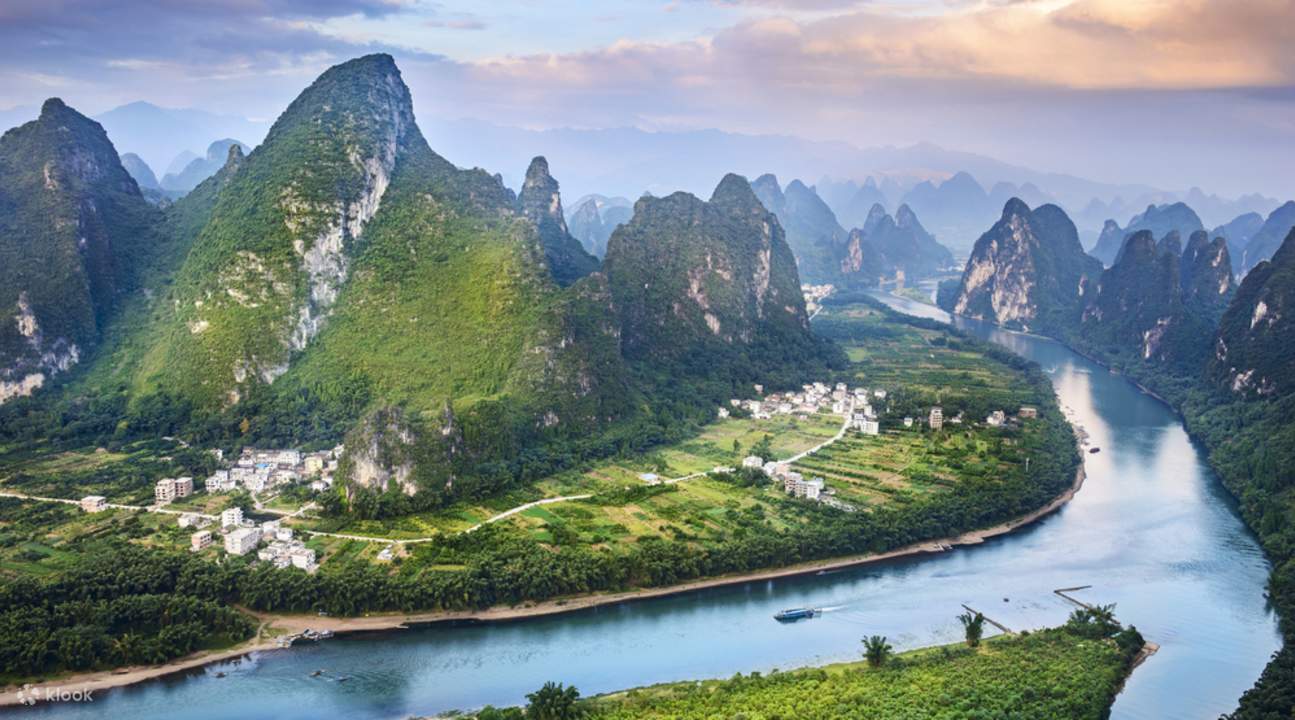
The Li River winds quietly between extraordinary limestone peaks.
Unlike the towering cliffs of Zhangjiajie, these mountains rise in softer, rounded forms from fields, bamboo groves and riverside villages.
For centuries, artists attempted to capture landscapes like this using ink and brush.
Travelling along the river today can feel like entering one of those paintings.
The cruise normally takes approximately four hours.
During that time, the scenery changes continuously.
Some peaks stand alone beside the river, while others overlap in layers, becoming paler as they recede into the distance.
Bamboo grows along the banks.
Small villages appear between fields.
Farmers work beneath the karst hills, while boats move slowly across the water.
Depending on local conditions, you may occasionally see traditional fishing scenes or water buffalo near the riverbanks.
Rather than trying to photograph every moment, take time simply to sit and watch.
The beauty of the Li River comes from its continuity.
There is no single dramatic viewpoint.
Instead, one landscape gently becomes another.
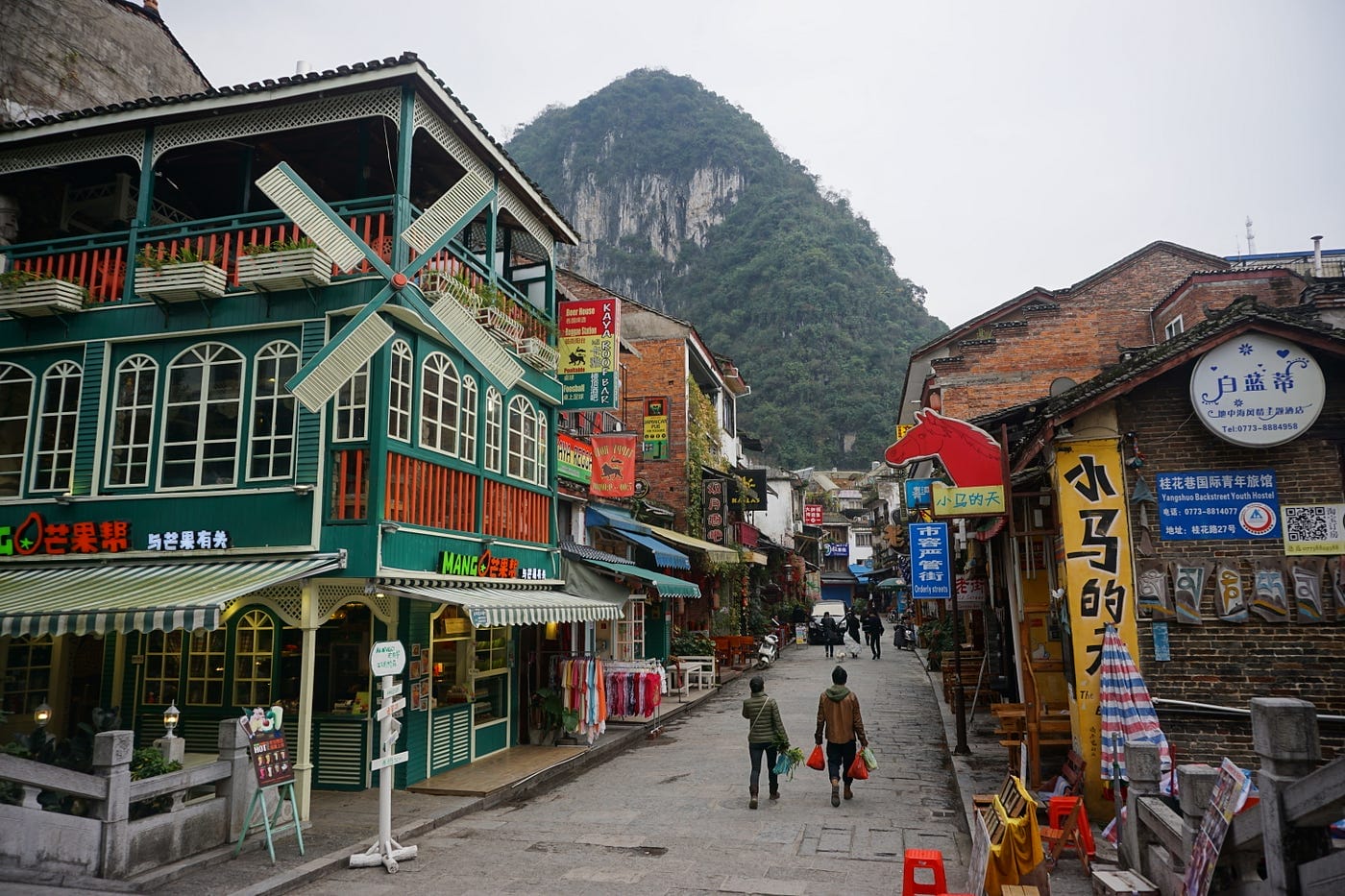
Eventually, arrive in Yangshuo, a small town surrounded by some of Guilin’s most beautiful karst scenery.
Despite its popularity with travellers, Yangshuo retains a relaxed atmosphere, particularly away from the busiest central streets.
Explore West Street, a pedestrian area where traditional architecture mixes with cafés, restaurants, small shops and international influences.
The street reflects Yangshuo’s long history as a meeting point between local residents and overseas visitors.
Take time to browse local handicrafts, enjoy a coffee or sample regional dishes.
Depending on the final arrangement, you may also have free time to walk beside the river or explore the countryside before returning to Guilin.
The journey back offers another opportunity to appreciate southern China’s rural scenery.
Arrive at your hotel in the late afternoon or evening.
Today offers a very different kind of travel pleasure.
There is little need for dramatic activity.
The river, mountains and villages provide the experience themselves.
Meals: Breakfast
Accommodation: Hotel in Guilin
Tour Highlights: Li River Cruise, karst mountain landscapes, rural scenery, Yangshuo and West Street
DAY 11: GUILIN – SHANGHAI – FROM POETIC LANDSCAPES TO MODERN CHINA
After breakfast, transfer to Guilin Airport for your domestic flight to Shanghai.
This journey creates one of the sharpest contrasts of the entire tour.
In the morning, you leave behind misty rivers, limestone mountains and quiet countryside.
A few hours later, you arrive in one of the world’s largest and most dynamic urban centres.
Welcome to Shanghai.
Upon arrival, meet your local English-speaking guide and transfer to the hotel.
During the journey into the city, the skyline begins to reveal itself.
Elevated highways pass residential towers, commercial districts and extraordinary modern architecture.
Shanghai’s identity has always been closely connected to trade and international exchange.
During the nineteenth and early twentieth centuries, the city developed into one of Asia’s major commercial ports.
Chinese merchants, international banks, shipping companies and foreign communities all contributed to its distinctive architecture and cosmopolitan atmosphere.
Today, that history exists beside a futuristic city of skyscrapers, high-speed transport and global finance.
After checking into the hotel, the remainder of the day is free.
You may simply rest after your flight or begin exploring independently.
One of the best introductions to Shanghai is an evening walk along the Huangpu River.
On one bank stand the historic buildings of the Bund.
Across the water rise the skyscrapers of Pudong, including some of the tallest buildings in China.
When illuminated after sunset, the skyline provides a spectacular contrast with the natural landscapes visited earlier in the journey.
The transition is symbolic.
Over the past several days, you have travelled through ancient capitals, archaeological sites and remote mountains.
Shanghai introduces the final chapter: China as a modern global metropolis.
Enjoy dinner independently and perhaps sample Shanghai-style cuisine, which often features lighter seasoning and slightly sweeter flavours than dishes from northern or western China.
Return to the hotel for a good night’s rest.
Tomorrow, your final full day of sightseeing reveals the city in greater depth.
Meals: Breakfast
Accommodation: Hotel in Shanghai
Travel: Domestic flight from Guilin
Tour Highlights: Arrival in Shanghai, cosmopolitan cityscape and optional evening waterfront walk
DAY 12: SHANGHAI – JADE BUDDHA TEMPLE, SILK HERITAGE, JIN MAO TOWER & THE BUND
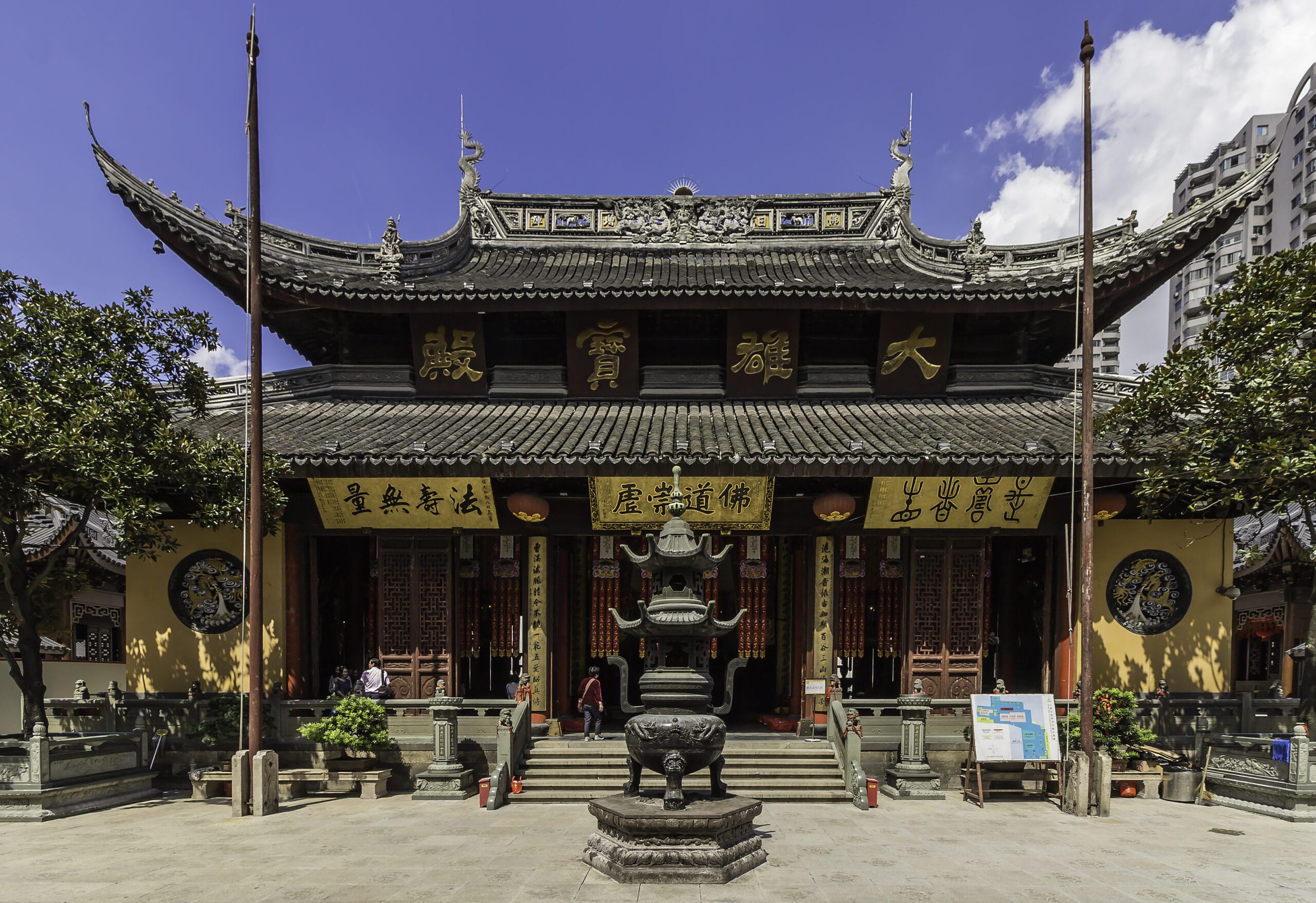
Begin your final full sightseeing day at the peaceful Jade Buddha Temple.
Founded during the late Qing period, the temple provides a calm spiritual contrast to the busy streets outside.
Its most famous treasures are sacred jade Buddha statues brought to Shanghai from Myanmar.
Within the temple courtyards, incense rises beneath traditional roofs while worshippers move quietly between halls.
The atmosphere offers an opportunity to reflect on the religious traditions encountered throughout your journey, from Buddhist heritage in Xi’an to the spiritual landscapes of China’s mountains.
Continue to a silk factory or silk cultural centre.
Silk has played a fundamental role in Chinese history.
For centuries, this highly valued material travelled across Asia and beyond, eventually giving its name to the network of trade routes known collectively as the Silk Road.
During the visit, learn how silkworm cocoons are transformed into fine threads and woven into fabrics.
Demonstrations reveal the remarkable delicacy and patience involved in traditional silk production.
Next, travel to the Pudong financial district and ascend the Jin Mao Tower.
From the observation level high above Shanghai, the entire scale of the metropolis becomes visible.
The Huangpu River curves through the city while skyscrapers rise in almost every direction.
Looking down from this height, Shanghai appears both carefully planned and almost endless.
In the afternoon, continue to The Bund.
This waterfront promenade offers one of Asia’s most remarkable architectural contrasts.
Behind you stand grand buildings constructed during Shanghai’s international trading era.
Across the river, Pudong’s futuristic towers rise from the opposite bank.
Few places communicate China’s transformation as clearly as this single view.
Walk slowly along the promenade and allow time for photography.
Later, continue to Nanjing Road, one of Shanghai’s most famous commercial streets.
Department stores, restaurants, historic shops and illuminated signs create an energetic final encounter with contemporary urban life.
Depending on your interests, enjoy free time for shopping or simply observe the crowds passing through the pedestrian district.
For your final evening, consider an optional Huangpu River cruise.
Seeing both sides of Shanghai illuminated from the water creates a fitting finale to the journey.
Meals: Breakfast
Accommodation: Hotel in Shanghai
Tour Highlights: Jade Buddha Temple, silk heritage, Jin Mao Tower, The Bund and Nanjing Road
DAY 13: SHANGHAI DEPARTURE – FAREWELL TO CHINA
Enjoy breakfast at your hotel and some final free time, depending on your flight schedule.
At the appointed time, your private driver will meet you and transfer you to the airport for your onward international flight.
As this thirteen-day journey comes to an end, it is worth looking back at the extraordinary range of experiences contained within a single country.
Beijing introduced the monumental world of imperial China.
You stood on the Great Wall as it crossed the northern mountains, walked through the enormous courtyards of the Forbidden City and discovered how emperors created harmony between architecture and nature at the Summer Palace.
Xi’an took you even deeper into history.
The silent Terracotta Warriors revealed the ambition of China’s first emperor, while the Muslim Quarter demonstrated how the Silk Road connected people, ideas and flavours across continents.
Then the journey shifted dramatically from human history to natural wonder.
In Zhangjiajie, sandstone pillars rose through forests and clouds.
You travelled above valleys by cable car, crossed dramatic mountain viewpoints and walked through landscapes that seemed almost unreal.
Guilin softened the scenery.
The Li River flowed between limestone peaks, villages and bamboo groves in a landscape long associated with Chinese poetry and painting.
Finally, Shanghai brought you back into the twenty-first century.
Glass towers, illuminated riverfronts and international architecture revealed a country continuing to transform at remarkable speed.
This is what makes the Ultimate China Journey so memorable.
It is not simply a collection of famous attractions.
It is a journey through different expressions of China itself:
imperial and modern, monumental and intimate, ancient and futuristic, dramatic and serene.
You leave with photographs of famous landmarks, but also with something deeper—a clearer sense of the extraordinary diversity that exists between China’s great cities, mountains, rivers and cultural traditions.
Meals: Breakfast
Accommodation: None
Service: Private airport transfer
Tour Conclusion: End of services
End of the trip!
FREQUENTLY ASKED QUESTIONS
Is 13 days enough to experience Beijing, Xi’an, Zhangjiajie, Guilin and Shanghai?
Yes. Thirteen days provides an excellent balance between China’s major historical cities and its most famous natural landscapes without making the itinerary excessively long.
What is the best time of year for this itinerary?
Spring and autumn are particularly attractive because temperatures are generally comfortable in Beijing, Xi’an, Zhangjiajie, Guilin and Shanghai. Each season, however, creates different scenery and weather conditions.
How physically demanding is the tour?
The itinerary requires moderate to active walking, especially in Beijing and Zhangjiajie. Mountain areas involve stairs, viewpoints, cable cars, elevators and uneven surfaces.
Is Zhangjiajie really the inspiration for Avatar?
Zhangjiajie’s sandstone pillar landscapes became widely associated with the floating mountain imagery in Avatar. Regardless of the film connection, the natural landscape is extraordinary in its own right.
Is the Bailong Elevator safe?
Yes. It is a major visitor transport facility within Zhangjiajie National Forest Park and carries large numbers of tourists daily, subject to regular operating controls.
Is the Glass Bridge suitable for children?
Older children usually enjoy the experience. Younger children should be closely supervised, and travellers with significant fear of heights may prefer to skip it.
Can we add cycling or bamboo rafting in Yangshuo?
Yes. Cycling, countryside exploration and bamboo rafting can be added depending on available time, weather and river conditions.
Is a Huangpu River cruise worth adding in Shanghai?
Yes. An evening cruise offers excellent views of both the historic Bund and the illuminated Pudong skyline.
Are domestic flights and trains included in the tour price?
They should be clearly confirmed in the final quotation. The standard published inclusions may exclude domestic air and rail tickets.
Can vegetarian meals be arranged?
Yes. Vegetarian dishes are widely available, though detailed dietary requirements should be provided before arrival.
Is gluten-free food easy to find?
Strict gluten-free dining can be challenging because soy sauce, noodles and shared cooking equipment are widely used. Advance preparation is recommended.
Is travel insurance necessary?
Comprehensive travel insurance is strongly recommended, including medical care, cancellation, delays and baggage protection.
How much luggage should we bring?
Travelling relatively light is recommended because the itinerary includes several domestic flights and train journeys.
Is Wi-Fi available at the hotels?
Most hotels provide Wi-Fi. However, access to some international websites and applications may be restricted in mainland China.
Can this tour be customised?
Absolutely. Extra nights can be added in Beijing, Zhangjiajie, Yangshuo or Shanghai, and the sightseeing pace can be adapted for families, senior travellers or photographers.