

Top 10 Local Street Foods in Bangkok You Must Try
Introduction: Bangkok’s Street Food – The Soul of Thailand’s Culinary Identity
In Bangkok, food is never just about sustenance. It is poetry on a plate, a steaming story served curbside, a living testament to Thailand’s layered culture and community. To eat in Bangkok is to time travel—tasting history, migration, family traditions, and innovation in every bite. The sizzling streets of Bangkok are not merely convenient dining spots for the hungry; they are stages upon which generations of Thai culinary heritage unfold daily.
Thailand’s culinary identity is deeply intertwined with its history. The country, once known as Siam, has absorbed waves of cultural influence—Chinese, Indian, Khmer, Portuguese, and Malay. Over centuries, these influences were not simply adopted but blended with indigenous herbs, spices, and preparation techniques. The result? A uniquely Thai cuisine celebrated for its bold balance of flavors—sweet, sour, salty, spicy, and umami—all often found in a single bite.
Street food in Bangkok is the ultimate expression of this identity. Unlike other global capitals, where gourmet cuisine sits atop culinary prestige, in Bangkok, it is often found on a plastic stool by the road. Vendors are custodians of recipes passed down for generations. Some dishes trace their origins to royal kitchens, others to working-class immigrants who shaped the city’s vibrant communities. Here, street food is democratic. It’s for everyone. Rich or poor, local or tourist, the street-side wok doesn’t discriminate.
Take a stroll through Yaowarat (Chinatown) or Bang Rak, and you’ll find more than food—you’ll find drama, ritual, craftsmanship. You’ll see grandmothers grinding curry paste by hand, teenagers deftly flipping roti with acrobatic flair, and middle-aged men tending grills like they’re conducting symphonies. It is not rare to see a queue of office workers, monks, and tourists lined up together for a single vendor’s legendary pad kra pao or boat noodles.
Bangkok’s street food culture isn’t just about the food—it’s about connection. With every plate comes a story. And every story begins on the street. Whether you’re embarking on a Thailand food tour, joining a Bangkok night market crawl, or just stumbling upon an unassuming cart down a soi (alley), prepare to be transformed. Below are 10 local street foods you absolutely must try in Bangkok—and the stories they whisper.
1. Pad Thai (ผัดไทย) – The National Dish That Wasn’t Always Thai
✧ Cultural & Historical Insight
Pad Thai may be globally synonymous with Thai cuisine, but its origins are far more modern—and political—than many expect. Unlike ancient dishes passed down through generations, Pad Thai was actually created in the mid-20th century as a symbol of Thai nationalism.
During the 1930s and 1940s, under Prime Minister Plaek Phibunsongkhram’s leadership, Thailand (then Siam) sought to modernize and create a unified national identity. As part of this initiative, Phibun launched a campaign to promote “Thai-ness” and reduce Chinese influence, which was then deeply rooted in Bangkok’s culinary scene.
Rice noodle dishes were widely associated with the Chinese-Thai community. To differentiate Thai identity, the government introduced and promoted a version of stir-fried noodles that was rebranded as distinctly Thai. Hence, “Pad Thai” was born—not just as a recipe, but as a political symbol of independence and unity.
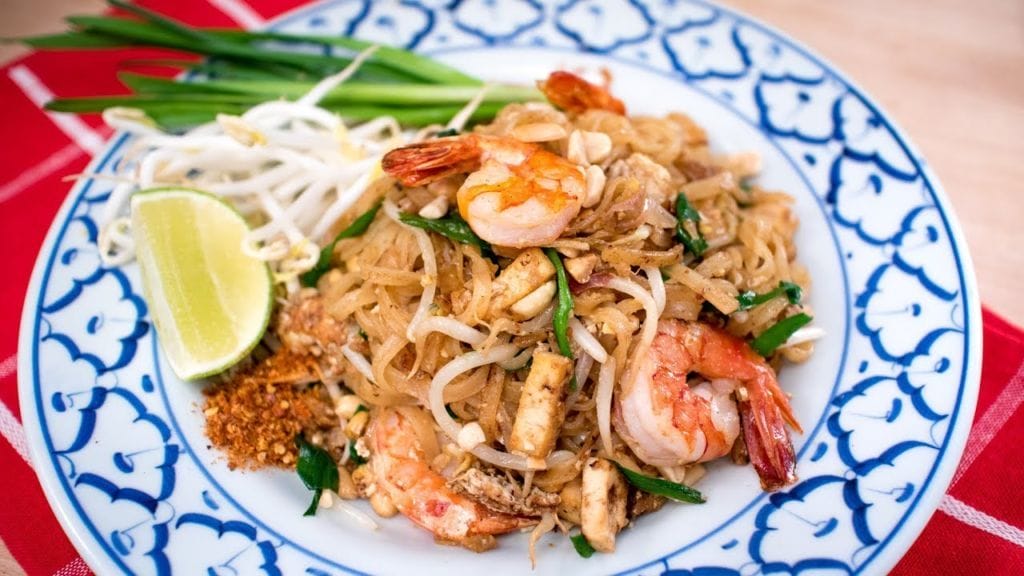
Interestingly, Pad Thai’s ingredients reflect the cultural crossroads of Thailand: rice noodles (Chinese), tamarind and fish sauce (local), peanuts (a New World crop), and dried shrimp (a coastal staple). The use of stir-frying as a cooking technique is also Chinese in origin, but the flavor profile—sweet, sour, salty, spicy, umami—is all Thai.
Today, Pad Thai is ubiquitous across Bangkok, from budget stalls in Banglamphu to high-end interpretations in luxury hotels. But it remains a humble food at heart—a dish born not from royalty, but from resourcefulness and reinvention. In a way, it tells the story of modern Thailand: multicultural, adaptable, and flavorful.
2. Som Tum (ส้มตำ) – Fiery Green Papaya Salad With Northeastern Roots
✧ Cultural & Historical Insight.
Som Tum is more than a salad—it’s a cultural signature of Isaan, Thailand’s northeastern region. Its roots lie deep in Laos and Isaan culinary tradition, where ingredients are minimal, yet flavors are explosive.
In Isaan villages, Som Tum began as a resourceful dish created by rural families using unripe papaya grown in backyard gardens. Originally pounded with fermented fish sauce (pla ra), lime, and chili in a clay mortar, it provided nutrition during dry farming seasons. This method of preparation—crushing ingredients to release oils and flavors—became iconic.
When Isaan people migrated to Bangkok in search of work during the 20th century, they brought Som Tum with them. At first, its fermented funk and intense spice levels shocked central Thai palates. But over time, urban-friendly versions emerged—milder, sweeter, and less pungent—helping Som Tum evolve from a regional specialty into a national obsession.
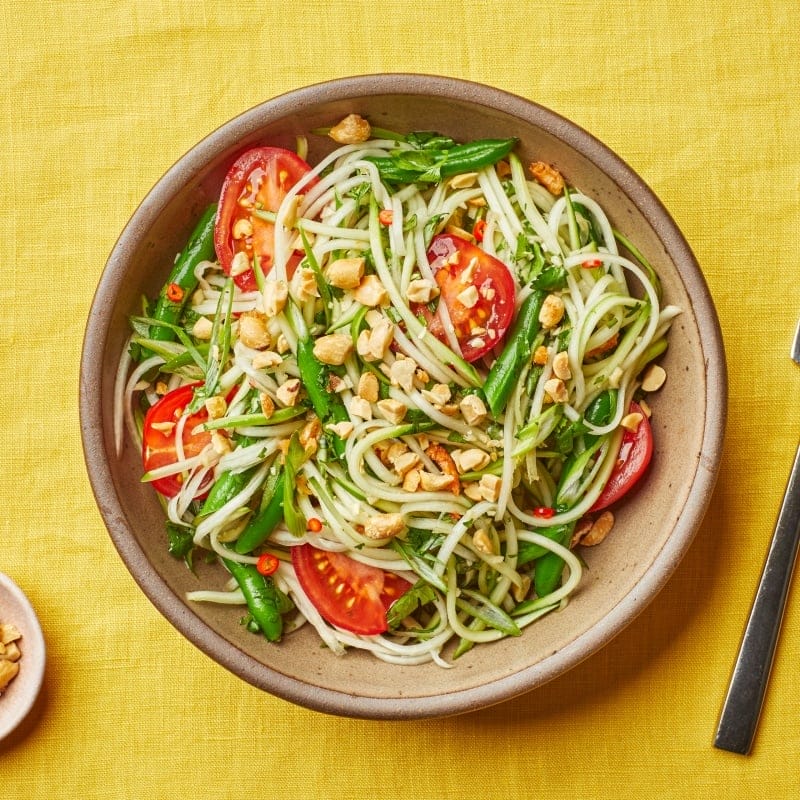
Today, it’s not just a salad but a social dish. Som Tum is often eaten communally, paired with sticky rice and grilled chicken. It’s essential to family picnics, temple fairs, and Bangkok office lunches alike. Thai people even have “Som Tum personalities” based on their preferred variation—some like it fiery and fermented, others prefer it sweet and crunchy.
The mortar and pestle technique used to make Som Tum also represents a larger culinary truth in Thai food: nothing is rushed, and each element is hand-prepared with care and balance. This dish exemplifies the Thai palate’s preference for duality and contrast—crunchy-soft, sweet-sour, salty-funky, fresh-fermented—all coexisting in one bowl.
Som Tum today is as much a marker of identity as it is a meal. For Isaan migrants in Bangkok, it is a taste of home and resilience. For travelers, it’s an entry point into the diversity of Thai regional cooking.
3. Moo Ping (หมูปิ้ง) – The Breakfast of Champions
✧ Cultural & Historical Insight.
Moo Ping, or grilled marinated pork skewers, is a dish that may appear simple at first glance—but it carries layers of meaning tied to urban migration, street life, and daily ritual.

While Thailand has a long tradition of grilling meats over charcoal, Moo Ping became a Bangkok street food staple in the late 20th century as rural workers moved to the capital. Many of these migrants, especially from Isaan and Northern provinces, turned to food vending as a source of income—setting up carts near transport hubs and selling skewers to workers on the go.
Unlike traditional meals that require sitting, Moo Ping is designed for commuter convenience. It’s eaten standing, walking, or on the back of a motorbike—with sticky rice clutched in the other hand. By 7:00 AM, sidewalks near BTS stations are fragrant with the aroma of pork fat dripping onto hot coals.
But it’s not just a convenience food. Moo Ping reflects Thai ingenuity in marination techniques, using fish sauce, soy, coriander root, and coconut milk to tenderize and flavor pork overnight. The result is sweet, salty, juicy meat that caramelizes perfectly under fire.
Moo Ping also represents community resilience. Many vendors pass down recipes through generations, each claiming their own secret twist. The most popular stalls form loyal customer bases and often become neighborhood landmarks.
In Thai culture, food is never just food—it’s connection. And Moo Ping, in its humble glory, is how Bangkok wakes up together, sharing breakfast across class lines, age groups, and regions.
4. Guay Teow Reua (ก๋วยเตี๋ยวเรือ) – Boat Noodles with a Bloody Twist
✧ Cultural & Historical Insight
Boat Noodles, or Guay Teow Reua, are one of Bangkok’s most culturally rich street food traditions—tied directly to the city’s ancient canal-based economy and floating markets.
In the 18th and 19th centuries, Bangkok was dubbed the “Venice of the East.” People lived, sold, and traveled by boat, with long-tail vendors serving food directly to customers on canals. One such vendor innovation was the small serving of beef or pork noodles in a rich, dark broth, cooked on the boat and handed over with bamboo ladles.
Why were the portions so small? Simply put, larger bowls risked tipping the vendor’s boat. And so began the tradition of tiny servings that modern-day boat noodle restaurants preserve—part culinary nostalgia, part playful challenge.
The dish’s most iconic ingredient—coagulated pig’s blood—serves a dual purpose. It thickens the broth while enhancing richness, almost like a silky gravy. Combined with star anise, cinnamon, garlic oil, and soy, it delivers a complex, spiced aroma reminiscent of Chinese medicinal broths—revealing the Sino-Thai fusion at its heart.
Today, although boat noodle boats are mostly gone, their memory lives on in places like Victory Monument, where dozens of shops compete to pile up your bowl count. Locals stack them like trophies—a visual testimony to a beloved tradition.
Eating boat noodles today is more than a meal—it’s a nod to Bangkok’s watery roots, a celebration of adaptation, and a rare dish that invites you to be a glutton without guilt.
5. Khanom Buang (ขนมเบื้อง) – Thai Crispy Pancakes of Ancient Origin
✧ Cultural & Historical Insight
Khanom Buang, often nicknamed the “Thai taco,” is far more than a sweet snack—it’s a culinary relic from the Ayutthaya period, showcasing the artistry and duality that defines Thailand’s traditional cuisines.
Its heritage can be traced to royal kitchens, where complex desserts were prized as symbols of grace and refinement. The original Khanom Buang recipes were deeply influenced by Portuguese techniques, introduced by Maria Guyomar de Pinha—a woman of Japanese-Portuguese descent credited with transforming Thai desserts in the 17th century. She introduced the concept of using egg yolks in sweets, which led to creations like “foi thong” (golden egg threads), still used today as Khanom Buang topping.
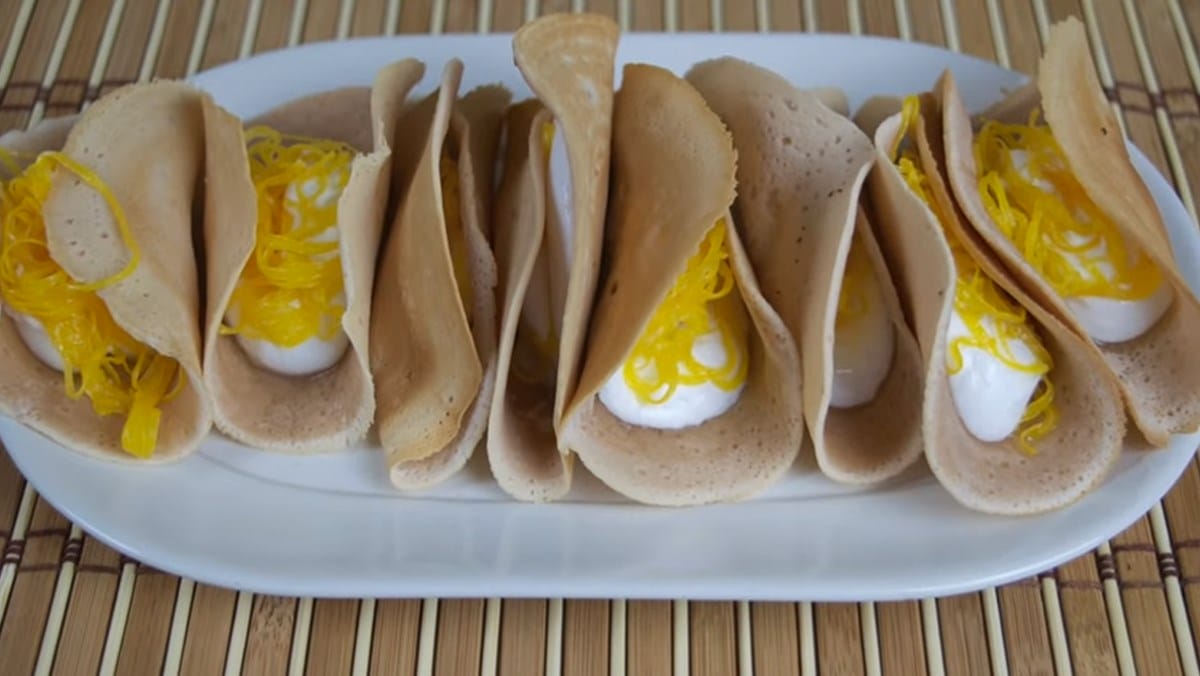
But Khanom Buang is more than history—it’s a street-side performance. Watching a vendor carefully pipe meringue, spoon fillings, and fold each crisp crepe is like observing a miniature ballet. There’s a joy in the process, a deliberate pause in a city that rarely slows down.
In Thai culture, sweets aren’t just dessert—they symbolize auspicious beginnings, offered during weddings, merit-making ceremonies, or festive occasions. Khanom Buang, in particular, embodies the balance of yin and yang: crispy and soft, sweet and salty, modern and ancient.
Each bite connects Bangkokians to a legacy of multi-ethnic innovation, royal influence, and community storytelling. Whether you find them at Chatuchak Market or a quiet alley near Tha Tien, Khanom Buang is a sweet whisper from Thailand’s past.
6. Khao Moo Daeng (ข้าวหมูแดง) – Red Pork Over Rice, Chinese Roots in Thai Style
✧ Cultural & Historical Insight
Khao Moo Daeng, or Thai-style red pork over rice, reflects the culinary fusion that defines much of Bangkok’s street food scene. With strong roots in the Chinese-Thai community, this dish traces its ancestry to Cantonese char siu, adapted to local tastes over generations.
In the late 19th and early 20th centuries, waves of Chinese immigrants—mostly Teochew and Hokkien—arrived in Siam, bringing with them a rich tradition of roasted meats. As they settled in Bangkok’s Yaowarat (Chinatown) and other districts, they began adjusting their recipes to local ingredients: using palm sugar instead of honey, incorporating Thai-style soy and fish sauce, and serving it with fragrant jasmine rice.
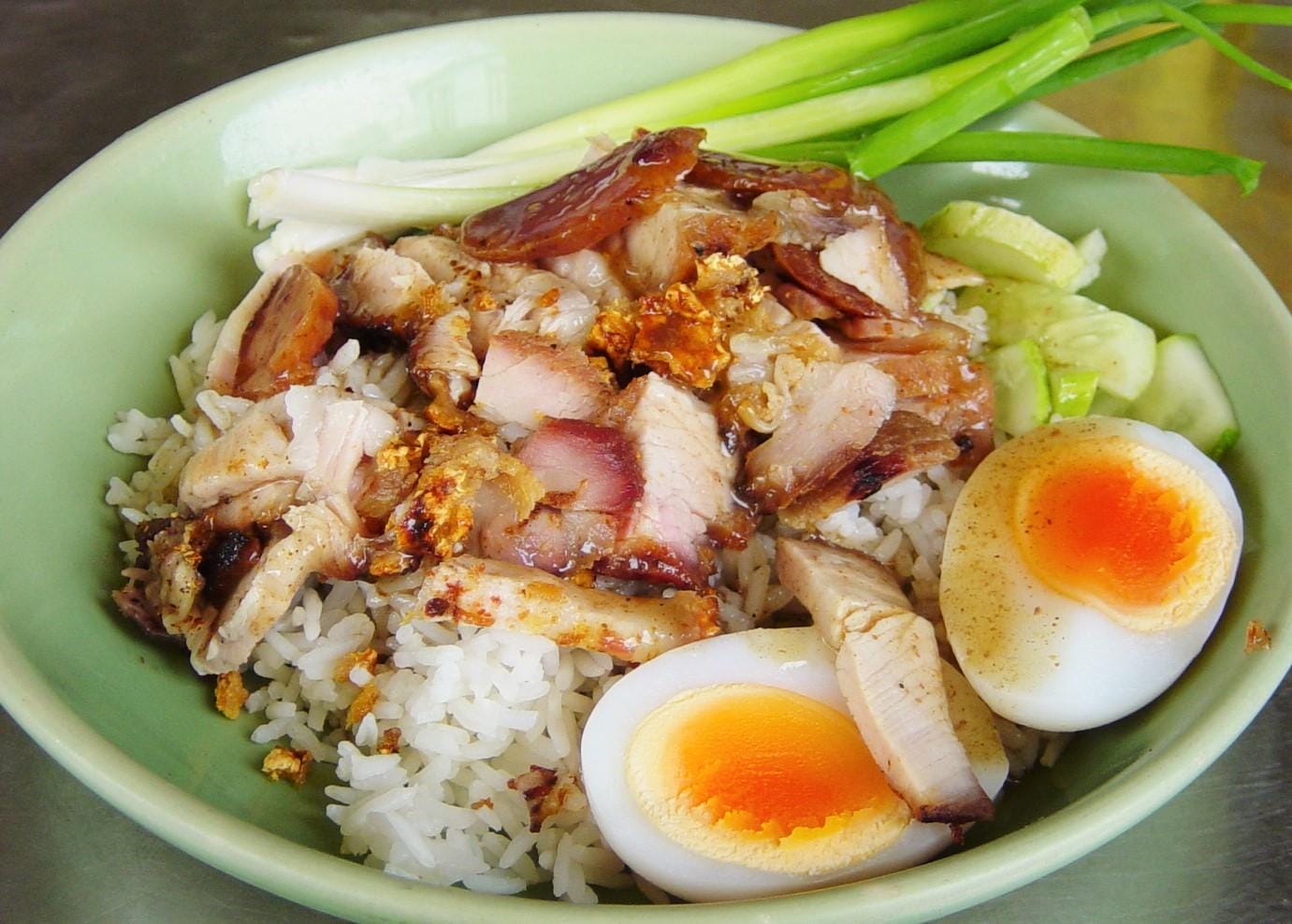
What distinguishes Khao Moo Daeng in Thai street food culture is its comforting familiarity. For many locals, it’s a go-to lunch—reliable, affordable, and fulfilling. Unlike bolder dishes, Khao Moo Daeng is subtle and layered, a harmony of textures: tender pork, slightly sticky sweet-salty sauce, crisp cucumber, and a hard-boiled egg to mellow the flavors.
The reddish hue—often achieved with fermented tofu or food coloring—is not just visual appeal, but a nod to its heritage. In Chinese culture, red symbolizes luck, prosperity, and celebration. Eating Khao Moo Daeng is, in a small way, a daily act of blessing.
Street vendors selling this dish often operate for decades, some even passing down their stalls for generations. The best ones develop cult-like followings, not unlike ramen shops in Tokyo.
Ultimately, Khao Moo Daeng tells a story of cultural coexistence—of immigrants who brought their flavors and found home in Bangkok, blending their food with Thai flavors to create something timeless.
7. Pla Pao (ปลาเผา) – Salt-Grilled Fish with Herbs
✧ Cultural & Historical Insight
Pla Pao is a testament to Thailand’s deep connection with freshwater life, community feasts, and natural simplicity. Often seen at markets and roadside stalls, this salt-crusted whole fish is as much a social event as it is a meal.
Grilling whole fish wrapped in salt isn’t unique to Thailand—but what makes Pla Pao distinct is its herb-stuffed cavity. Lemongrass and kaffir lime leaves aren’t just flavoring agents; they’re sacred plants in Thai culture, symbolizing purification, protection, and vitality. Their aroma permeates the fish, creating a multisensory experience that is clean, fragrant, and earthy.
In rural villages, Pla Pao is often prepared during temple fairs or family gatherings, laid out in communal style with fresh herbs, sticky rice, and dipping sauces. The method of wrapping the fish in salt serves a practical purpose—it keeps moisture in, even when grilled over intense charcoal flames. The result? A fish that flakes gently under a spoon, with every bite steeped in smoke and citrus.

Pla Pao is also reflective of Thailand’s geography. With rivers and canals running through central Thailand, tilapia and snakehead fish are readily available, making this dish a sustainable staple. Even in urban Bangkok, Pla Pao is a constant at night markets—where city dwellers gather with friends over cold beers, grilled fish, and laughter.
Eating Pla Pao, then, becomes an act of reconnection—to community, to simplicity, and to the primal joy of food prepared over fire. It’s street food at its most elemental and spiritual.
8. Roti Gluay (โรตีกล้วย) – Banana Pancakes with a Smile
✧ Cultural & Historical Insight
Though now a beloved late-night dessert across Bangkok, Roti Gluay originates from Thailand’s Muslim-Indian minority, particularly in the southern provinces. Brought by Indian and Malay traders and adapted by Thai Muslims, this street dessert is a symbol of multicultural coexistence and modern indulgence.
The roti dough itself is a reflection of Indian paratha—layered, stretchy, and fried until golden. Over time, Thai vendors began adding bananas (often overripe for sweetness), condensed milk, and even chocolate, creating a fusion dessertthat feels both exotic and nostalgic.
What makes Roti Gluay stand out is its performative element. On Bangkok streets—especially around Khao San Road or Sukhumvit—vendors stretch and spin the dough theatrically before slapping it onto sizzling griddles. Watching the preparation is half the joy; it’s part street snack, part show.
For Thai Muslims, especially in Bangkok’s Petchaburi and Ramkhamhaeng areas, selling roti is more than a livelihood—it’s a way of preserving identity in a fast-changing world. Despite modernization, many still make the dough from scratch, hand-knead it each morning, and teach the art to their children.
Roti Gluay today represents culinary globalization in reverse—an international dessert that remains hyperlocal. Loved by tourists, cherished by locals, and respectful of its roots, it serves as a delicious metaphor for how Bangkok blends tradition and trend.
9. Hoy Tod (หอยทอด) – Crispy Oyster Omelette from Chinatown
✧ Cultural & Historical Insight
Hoy Tod is an oyster or mussel omelette that’s crunchy, chewy, and utterly indulgent. It is a classic example of Teochew-Chinese influence on Bangkok cuisine, originating from Bangkok’s Chinatown, one of the most vibrant and oldest in Southeast Asia.
In Chinese-Thai communities, oysters symbolize wealth, luck, and abundance. During festivals or important family dinners, Hoy Tod is often served as a celebratory dish. When brought to the street, it morphed into a crispier, snackable version using rice flour and starch for added crunch—ideal for fast frying in searing-hot woks.
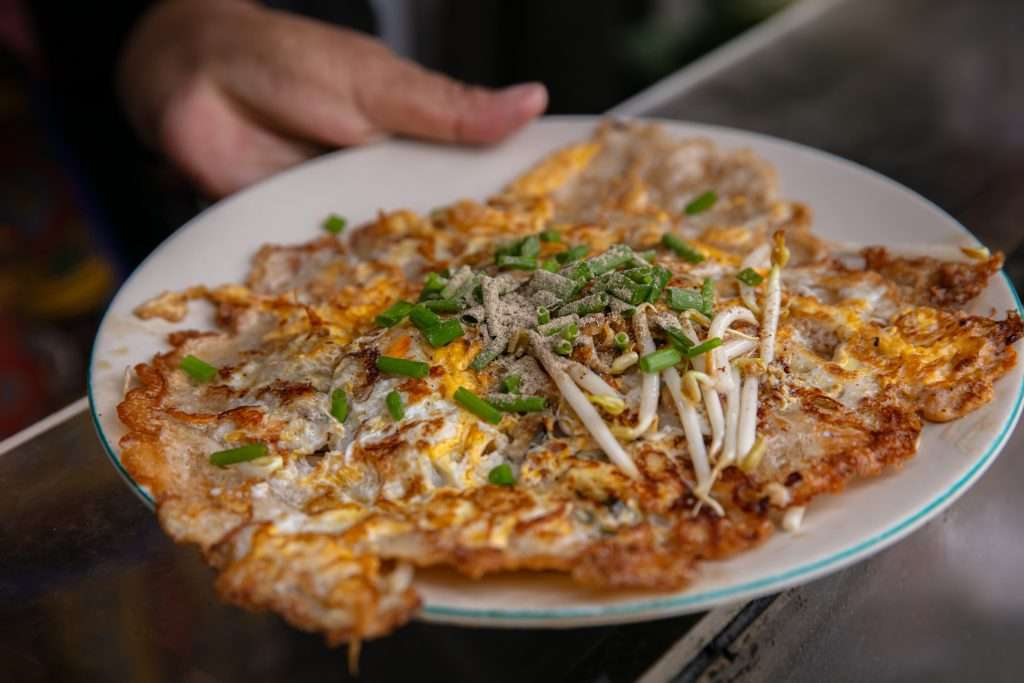
Its enduring appeal lies in its textural contrast—crispy batter, gooey egg, and soft, briny oysters—combined with the addictive zing of chili-vinegar dipping sauce. It’s best eaten hot, fresh from the wok, with steam rising from the plate.
Hoy Tod vendors often work with generational pride, using cast-iron woks that are blackened from decades of use. These stalls, especially those in Yaowarat, are often passed down from parent to child, preserving a family recipe with cult status.
Eating Hoy Tod in Bangkok is like biting into history. It’s greasy, unapologetically indulgent, and deeply rooted in a community that helped build the city.
10. Gai Tod (ไก่ทอด) – Southern Thai Fried Chicken with Street Soul
✧ Cultural & Historical Insight
Gai Tod, or Thai-style fried chicken, may appear Western at a glance—but its soul lies in the Muslim communities of Southern Thailand, especially in provinces like Yala, Pattani, and Narathiwat.
These regions are home to Malay-Thai Muslims who brought a distinct spice blend to the art of frying chicken. Instead of just flour and oil, Southern Thai Gai Tod features turmeric, coriander root, garlic, and white pepper—giving it a golden hue and earthy depth not found in American-style chicken.
When these communities migrated to Bangkok, many set up Gai Tod stalls near mosques and markets. What began as a provincial favorite soon became a citywide obsession. Vendors, often wearing hijabs and floral aprons, continue to serve fried chicken with sticky rice, som tum, and sweet chili sauce—all wrapped in banana leaves.
But Gai Tod is more than a dish—it’s a symbol of Muslim identity, integration, and entrepreneurial resilience. During the holy month of Ramadan, the dish becomes central to evening iftars, shared with family and neighbors of all faiths.
In a country that celebrates food as cultural currency, Gai Tod stands proudly at the intersection of faith, flavor, and community. It proves that even deep-fried comfort food can carry deep meaning.
Conclusion: Every Bite Tells a Story in Bangkok’s Street Food Culture
Bangkok’s street food isn’t a list of dishes. It’s a living, breathing organism—a reflection of history, culture, migration, and love. Each dish you taste on the street tells a deeper story of community and identity. Whether you’re on a Thailand food tour, exploring the Thailand traditional cuisines of your ancestry, or simply indulging your curiosity for Thailand street foods, the flavors of Bangkok stay with you long after the trip ends.
To explore Bangkok’s street food is to touch the soul of Thailand—with your fingers, your senses, and your heart.
Tags:
Bangkok street food,local Thai dishes,Thai cuisine,Thai food,Thailand Family Tour,Thailand Holiday,Thailand travel,thailand vacation