
Introduction
Bangkok’s temple scene is nothing short of spectacular. As you step into the heart of Thailand’s bustling capital, the city’s spiritual soul quietly reveals itself in golden spires, chanting monks, and the scent of burning incense. While skyscrapers and shopping malls dominate the skyline, it’s in the ornate temples—known as “wats”—that the true essence of Thai culture and history breathes. Visiting Bangkok without exploring its temples would be like reading only the last chapter of a novel. These sacred sites are far more than Instagram backdrops; they’re living spaces of devotion, resilience, and unmatched craftsmanship. Whether it’s your first time in Thailand or a return trip, temple-hopping in Bangkok never loses its allure. The city offers an overwhelming number of wats, each with its own story, architectural style, and spiritual significance. But among them, ten stand out—not just for their beauty but for the unforgettable experiences they offer. So put on your respectful attire, ready your camera, and open your mind. You’re about to journey through Bangkok’s most mesmerizing temples.
-
Wat Phra Kaew (Temple of the Emerald Buddha)
Walking through the gates of the Grand Palace complex, it’s impossible not to feel a shift in energy. Wat Phra Kaew, nestled within these royal grounds, is often described as the spiritual nucleus of Thailand. Unlike other temples, it doesn’t house monks or host daily prayers. Instead, it stands as a sanctified space for the country’s most revered icon—the Emerald Buddha.
The temple’s grandeur can be overwhelming at first. The Emerald Buddha itself, a small but incredibly sacred jade statue, sits high above eye level, perched on a golden pedestal inside the main ordination hall (ubosot). Despite its modest size, the statue’s presence is commanding. The King of Thailand personally changes its seasonal robes three times a year in a royal ceremony—a tradition symbolizing the nation’s spiritual cycle.
Every surface of the temple dazzles. From shimmering mosaics and golden garudas to delicate murals that narrate the Ramakien (Thailand’s version of the Ramayana), it’s a kaleidoscope of color and symbolism. Don’t rush. Allow time to absorb the details—each tile and carving has a story to tell.
-
Wat Arun (Temple of Dawn)
At the break of dawn, when the Chao Phraya River reflects hues of pink and orange, Visiting Wat Arun seems to awaken with the city. This riverside marvel is iconic not just for its aesthetics but for the journey it invites.
Approach Wat Arun by boat if you can—it’s the most poetic way to meet her. As you near the towering central prang (Khmer-style spire), you’ll notice it’s encrusted with colorful porcelain and seashells. Up close, the intricate patterns tell a story of cultural fusion and artistic ingenuity. Climbing the steep steps offers both a physical and metaphorical ascent. At the top, the view of the river and surrounding temples is worth every breathless step.
Wat Arun represents Mount Meru, the center of the universe in Buddhist cosmology. At sunset, when the temple lights up, it transforms again, proving that Wat Arun’s magic isn’t bound to the hours of daylight.
-
Wat Pho (Temple of the Reclining Buddha)
Located just south of the Grand Palace, Wat Pho is a sanctuary of healing and wisdom. It’s most famous for its Reclining Buddha—a 46-meter-long golden figure that radiates peace and enlightenment. The Buddha’s serene expression and massive feet, inlaid with mother-of-pearl depicting auspicious symbols, are breathtaking in scale and detail.
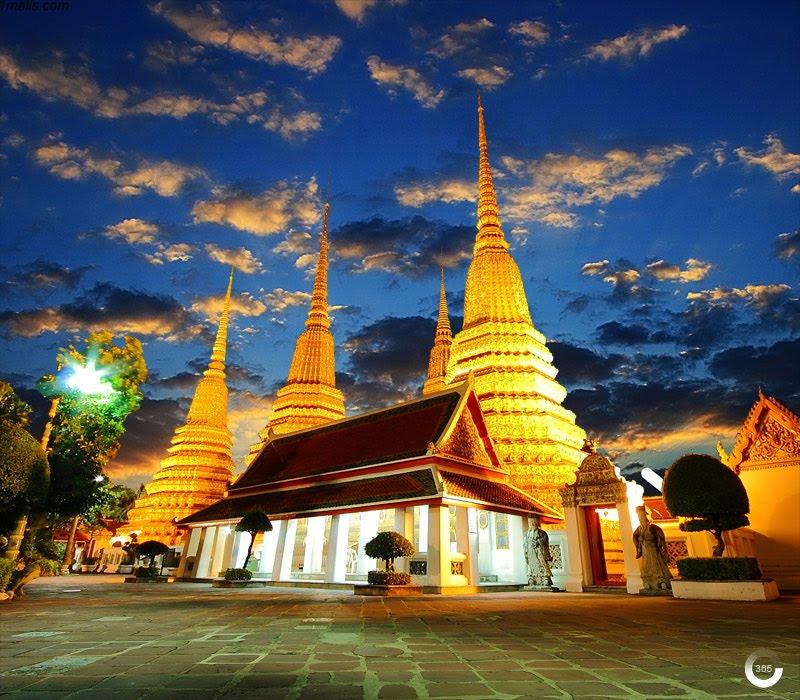
But Wat Pho is more than its headline attraction. It’s the birthplace of traditional Thai massage, and the temple grounds still host a massage school. Many travelers pause here not just to marvel but to relax under expert hands.
Wander the courtyards and chapels—you’ll find over a thousand Buddha images, shaded gardens, and monk students chanting in unison. Wat Pho carries the soul of a place deeply committed to both physical and spiritual well-being.
-
Wat Saket (The Golden Mount)
To reach Wat Saket, you ascend 344 winding steps wrapped around a leafy artificial hill. The climb, though gentle, feels like a pilgrimage. At the summit stands a gilded chedi (stupa) that glows under the Bangkok sun.
Wat Saket’s atmosphere is contemplative, almost otherworldly. The city noise fades, replaced by the sound of bells and fluttering prayer flags. The panoramic view is a bonus, offering a serene vantage point to appreciate Bangkok’s blend of chaos and calm.
This temple was once the highest point in the city and has long served as a place of cremation and remembrance. Every November, during Loy Krathong, a candlelit procession winds up the mount, drawing locals in a river of light.
- Wat Traimit (Temple of the Golden Buddha)
Wat Traimit is a story of serendipity and historical irony. For years, a plain plaster statue sat unnoticed in a visit to Bangkok temple until one day in the 1950s, it was accidentally dropped during relocation. The plaster cracked to reveal a gleaming gold figure beneath—five and a half tons of solid gold, to be precise.
Now enshrined in a striking white-and-gold temple in Chinatown, the Golden Buddha is believed to date back to the Sukhothai period. It’s a symbol not just of religious devotion but of Thailand’s hidden riches and resilience.

The museum on-site adds context with exhibits on the statue’s discovery and the history of Chinatown. Visiting Wat Traimit is like unearthing a secret—both literally and spiritually.
-
Wat Benchamabophit (The Marble Temple)
Wat Benchamabophit is a hymn to symmetry and serenity. Built of Italian Carrara marble, it stands out among Bangkok’s temples for its European neoclassical influences blended with Thai aesthetics. You might recognize it from the back of the five-baht coin.
The main ordination hall houses a replica of Phra Buddha Chinnarat, considered one of Thailand’s most beautiful Buddha images. The courtyard is lined with Buddha statues in various mudras (hand gestures), each representing a specific teaching or moment in the Buddha’s life.
This temple is still very much alive—a place where monks live, study, and perform daily rituals. Arrive early in the morning to witness monks collecting alms in quiet procession. It’s a moment of stillness amidst the city’s rush.
-
Wat Ratchanatdaram (Loha Prasat)
Wat Ratchanatdaram is unlike any other temple in Bangkok. Its centerpiece, Loha Prasat or the “Metal Castle,” rises in geometric perfection with 37 metal spires representing the 37 virtues toward enlightenment.
The interior is minimalist, with labyrinth-like corridors that lead upward to a shrine containing a relic of the Buddha. The climb feels introspective, echoing the meditative journey of self-discovery.
From the top, you get a unique view of the old city. Nearby, the King Rama III Memorial and the Mahakan Fort round out the area’s historical richness. Wat Ratchanatdaram isn’t flashy—it’s profound.
-
Wat Suthat and the Giant Swing
Wat Suthat is vast and often blissfully uncrowded. Its red-tiled roof and sweeping corridors house some of the oldest and most refined murals in Thailand. The principal Buddha image, Phra Sri Sakayamuni, was transported from Sukhothai and radiates grace.
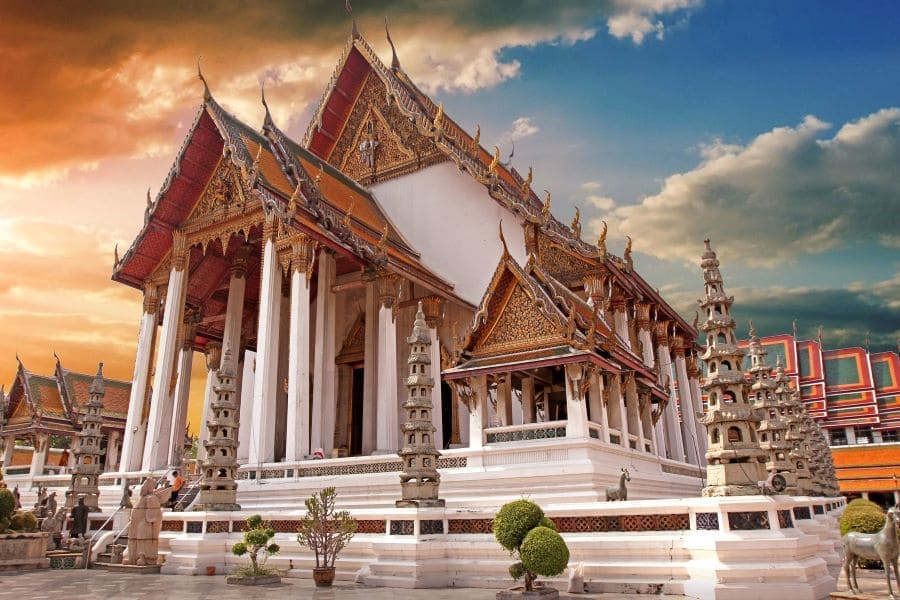
Outside stands the Giant Swing, a towering red structure once used in a Brahmin ceremony where young men would swing to the heavens to grab a bag of coins. The practice was eventually banned for safety reasons, but the swing remains a dramatic landmark.
Wat Suthat feels meditative, less commercialized than its famous counterparts. It invites long, quiet contemplation.
-
Wat Mahathat Yuwaratrangsarit
Just steps from Sanam Luang and opposite Wat Phra Kaew, Wat Mahathat is home to one of Thailand’s most respected Buddhist universities and the headquarters of the Mahanikai monastic order.
It’s a working monastery, buzzing with monks and novices in saffron robes. On weekends, the adjacent amulet market fills with locals seeking protective charms and spiritual advice.
Wat Mahathat also offers meditation courses in English, making it a haven for those seeking not just observation but participation. It’s the kind of temple that meets you wherever you are on your spiritual path.
-
Wat Prayoon (Wat Prayurawongsawat)
Across the river from the Old City, Wat Prayoon is a hidden gem. Its white, bell-shaped chedi dominates the skyline of Thonburi, but it’s the turtle-filled pond and quirky miniature spirit house garden that give it charm.
The temple recently underwent a major restoration and won a UNESCO Award of Merit for cultural heritage conservation. Its peaceful grounds and intriguing museum make it a great spot for reflection.
Wat Prayoon feels like a neighborhood temple—welcoming, grounded, and full of surprises. It’s a fitting end to any temple tour, offering a moment of quiet before you return to the urban buzz.
Final Thoughts
Traveling to Bangkok’s temples are more than tourist attractions—they are living expressions of faith, artistry, and the Thai way of life. Each wat tells a different story, echoing centuries of devotion, kingship, and creativity. As you explore these ten sacred spaces, you’re not just ticking off sites—you’re stepping into a spiritual dialogue that’s been ongoing for generations.
From the grandeur of Wat Phra Kaew to the quiet intimacy of Wat Prayoon, the journey through Bangkok’s temples offers both outer discovery and inner reflection. Whether you climb the steps of the Golden Mount or sit in silent meditation at Wat Mahathat, these experiences linger long after your trip ends.
Respect the traditions, engage with the history, and allow yourself to be moved. Bangkok’s temples are open-hearted storytellers—you only have to listen.
Tags:
Giant Swing Wat Suthat,Golden Buddha at Wat Traimit,Golden Mount Bangkok skyline,Loha Prasat metal spires,Marble Temple Bangkok courtyard,Meditation at Wat Mahathat,Turtle pond Wat Prayoon,Wat Arun sunrise river view,Wat Pho Reclining Buddha,Wat Phra Kaew Grand Palace