Cambodia’s Sankranta, also known as Khmer New Year, is a vibrant and culturally rich festival celebrated annually in mid-April. This three-day event marks the end of the harvest season and the beginning of a new year, aligning with the traditional solar calendar. The festival is deeply rooted in Buddhist traditions and is a time for family reunions, religious ceremonies, and community celebrations.
Day 1: Moha Sangkran – Welcoming the New Year
The first day, known as Moha Sangkran, signifies the end of the old year and the beginning of the new. Families clean their homes to eliminate bad luck and decorate them with lights and flowers. Offerings are made at temples, and people light candles and incense to honor the Buddha. It’s customary to wash one’s face in the morning, chest at noon, and feet in the evening with holy water, symbolizing purification.
Day 2: Veareak Vanabat – Honoring Ancestors and Charity
The second day, Veareak Vanabat, focuses on charitable acts and paying respect to ancestors. People visit pagodas to offer food and gifts to monks, which is believed to bring blessings to their ancestors. It’s also a day for giving to the less fortunate, reflecting the values of compassion and generosity.
Day 3: Veareak Laeung Sak – Blessings and Water Rituals
The final day, Veareak Laeung Sak, involves rituals for cleansing and blessings. Buddha statues are bathed with perfumed water, symbolizing the washing away of sins and bad luck. Younger people pour water over the hands of elders, seeking their blessings and showing respect. This act is believed to bring longevity and prosperity.
Traditional Games and Cultural Performances
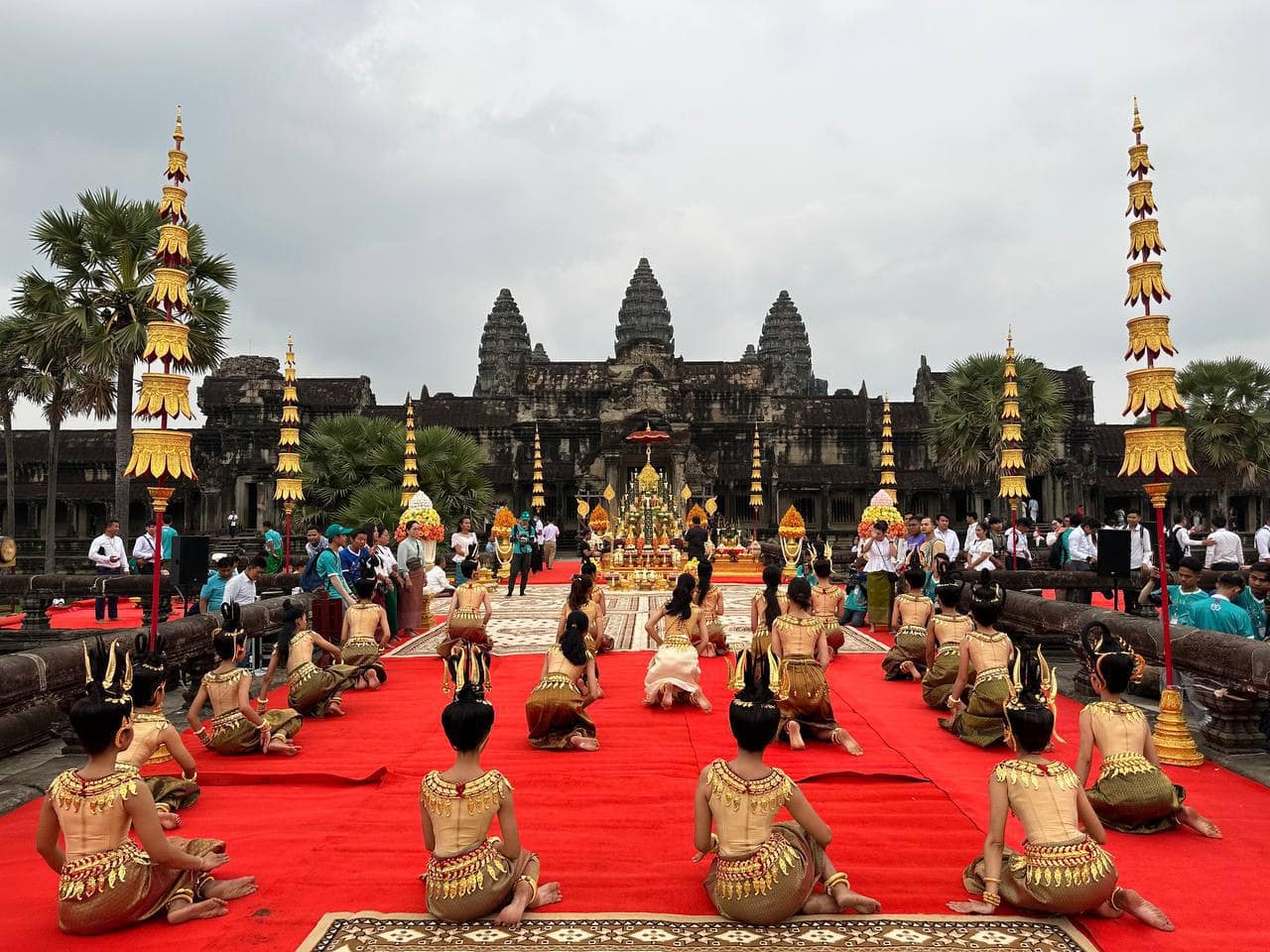
During Sankranta, traditional games like Chol Chhoung and Leak Kanseng are played, fostering community spirit and joy. Cultural performances, including traditional dances and music, are held in public spaces, showcasing Cambodia’s rich heritage.
Culinary Delights of Sankranta
Food plays a significant role in the celebrations. Traditional dishes such as Kralan (sticky rice with beans and coconut roasted in bamboo) and Num Ansom (sticky rice cake with banana or pork) are prepared and shared among families and communities.
Angkor Sankranta – A Grand Celebration
In Siem Reap, the Angkor Sankranta festival is a major attraction, drawing locals and tourists alike. The event features a variety of cultural activities, including traditional games, dance performances, and exhibitions, set against the backdrop of the historic Angkor Wat temple complex.
FAQs
Q: What is the significance of water in Sankranta rituals?
A: Water symbolizes purification and the washing away of sins and bad luck. It’s used in various rituals, including bathing Buddha statues and elders.
Q: Are there specific foods associated with Sankranta?
A: Yes, traditional foods like Kralan and Num Ansom are commonly prepared and enjoyed during the festival.
Q: Can tourists participate in Sankranta celebrations?
A: Absolutely. Tourists are welcome to join in the public festivities, games, and cultural performances.
Q: Is Angkor Sankranta different from other celebrations?
A: Angkor Sankranta is a larger-scale celebration held in Siem Reap, featuring extensive cultural events and attracting a significant number of visitors.
Q: How long does the Sankranta festival last?
A: The festival spans three days, typically from April 14th to 16th, but celebrations can extend longer in some areas.
Cambodia’s Sankranta is a festival rich in traditions and cultural significance. From religious rituals to communal celebrations, it offers a unique insight into Cambodian heritage. Whether you’re participating in water rituals, enjoying traditional foods, or witnessing cultural performances, Sankranta provides an unforgettable experience.
Experience the vibrant traditions of Cambodia’s Sankranta festival firsthand.
Join our guided Cambodia tour to immerse yourself in the cultural celebrations and create lasting memories.
Tags:
Cambodia Sankranta,Cambodian customs,cambodian festivals,Cambodian heritage,Cambodian traditions,Khmer culture,Khmer New Year,New Year celebrations,Sankranta practices,Sankranta rituals